
Free visual inspection and a written scope of work before any mitigation begins - photos, moisture readings, and drying logs go in your claim file
The scope we write is the scope we bill. Anything new gets shown to you, in writing, before we touch it.
 Before
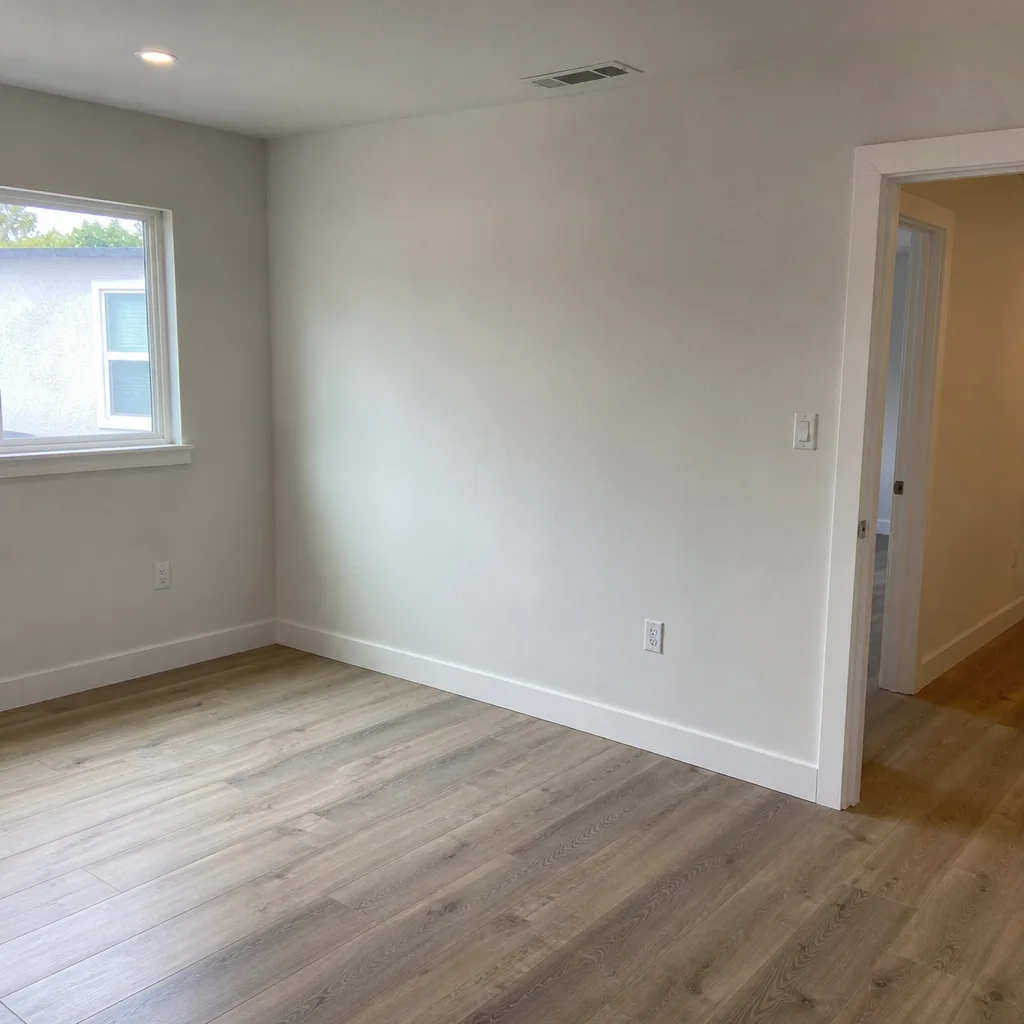 After
After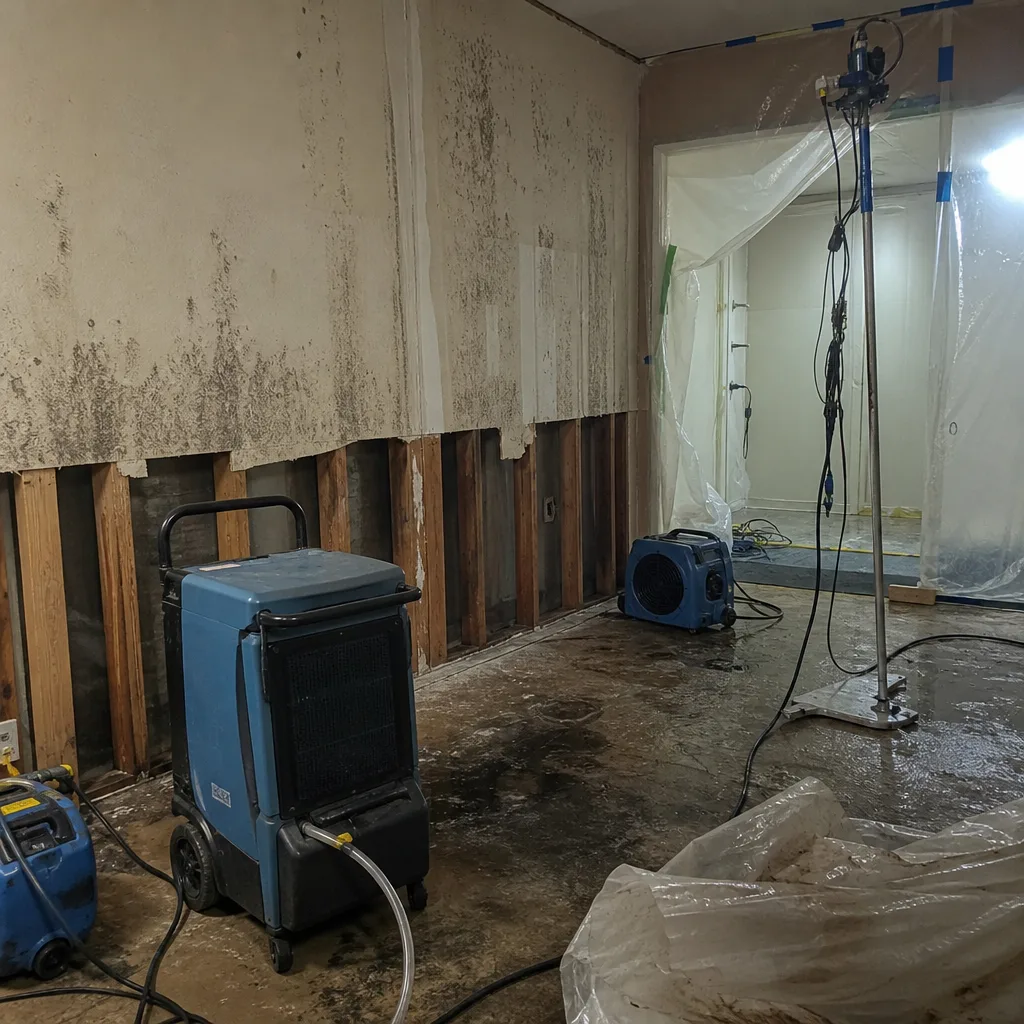 Before
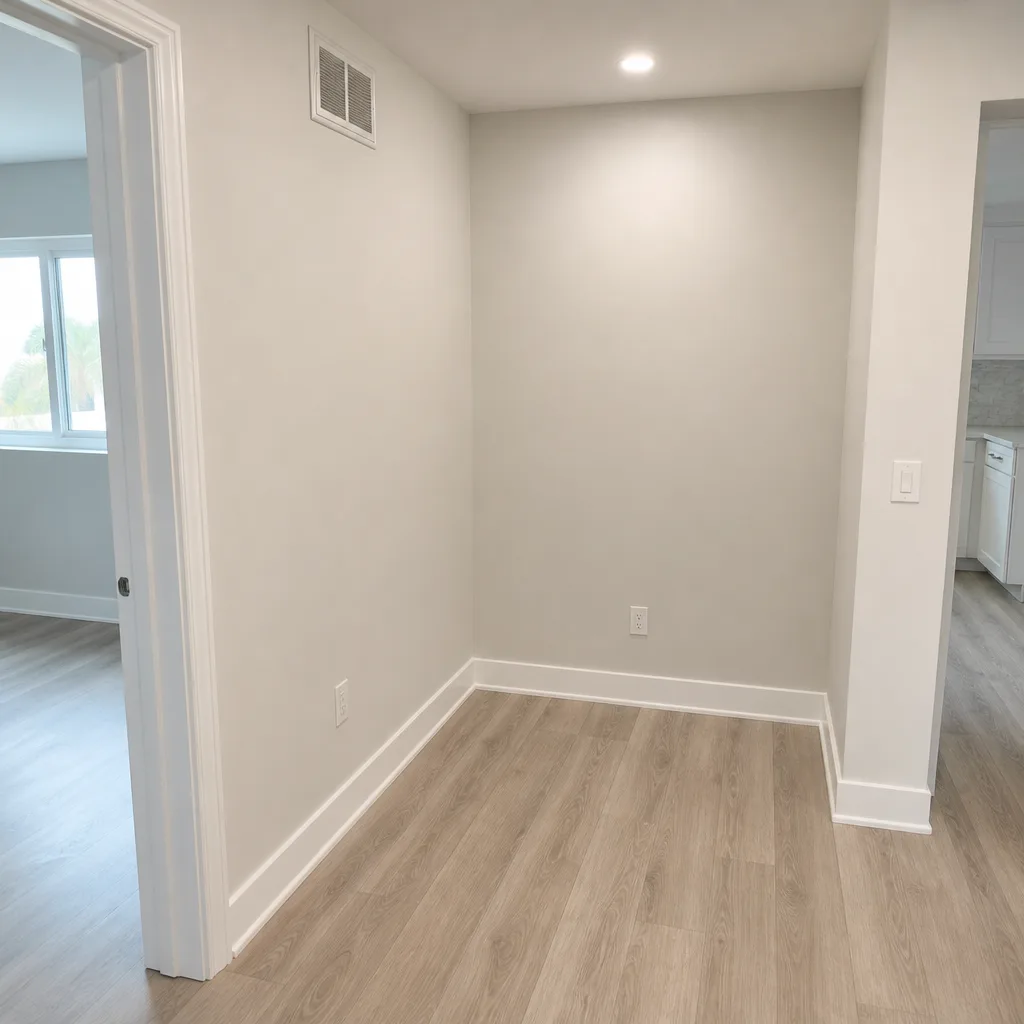 After
After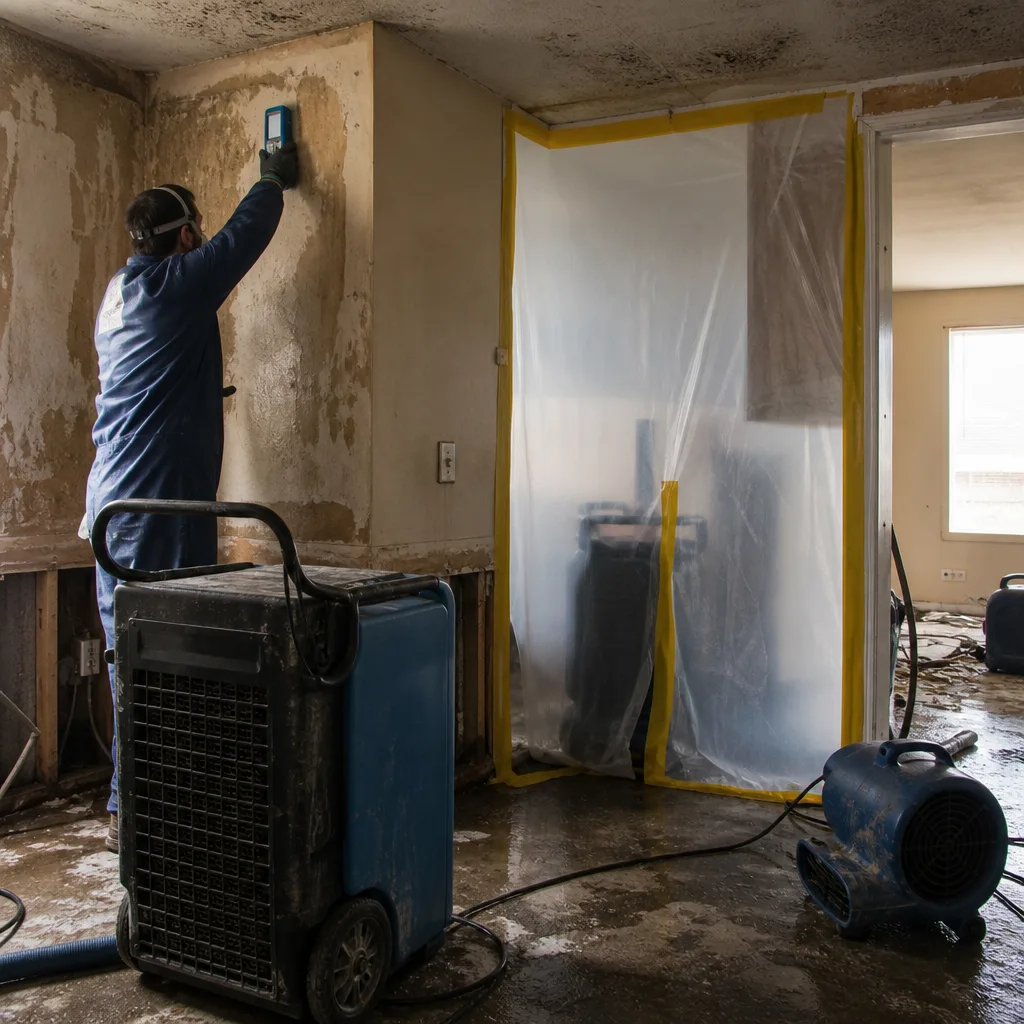 Before
 After
AfterFast, Reliable Mold Remediation Across Downey
Mold remediation in Downey typically costs $2,800-$6,500 for whole-room treatment and $450-$1,200 for contained spot removal, with most projects requiring 3-7 business days due to mandatory asbestos testing protocols. If you’re seeing discoloration on walls, catching a musty smell in a bathroom, or dealing with a slab leak in a 1950s tract home off Paramount Blvd, call (424) 373-5092. Our crews are dispatched from the Los Angeles office and carry the asbestos-aware containment gear that Downey’s housing stock demands. We answer live, 24 hours a day, 7 days a week.
Why DryMark Restoration Long Beach Is Downey’s Preferred Mold Remediation Company
We’ve restored homes in the Brookshire and Gallatin neighborhoods, the streets north of Firestone Boulevard, and the original aerospace tracts south of Imperial Highway. Downey homeowners know their homes were built fast during the North American Aviation boom, and they know that speed came with materials now regulated. Our reviews from Downey customers consistently mention the same thing: we name the problem in writing before we start, and we don’t touch a floor until the asbestos consultant clears it.
Response time to Downey averages 45-90 minutes from dispatch. That’s not a marketing number; it’s what the 605-to-105 corridor allows during normal traffic, and our dispatchers know which surface streets to use when the freeways lock up.
Our local knowledge is specific. We know which Downey blocks have the original galvanized supply lines that fail at the slab. We know the Rio Hondo-adjacent streets that took water in the last El Niño event. And we know that a mold call in Downey is almost always a two-phase job: asbestos assessment first, remediation second. Homeowners who’ve already dealt with one contractor who skipped that sequence and got stopped by LA County Environmental Health call us to finish the job properly.
Our Mold Remediation Services in Downey
Mold Inspection & Testing
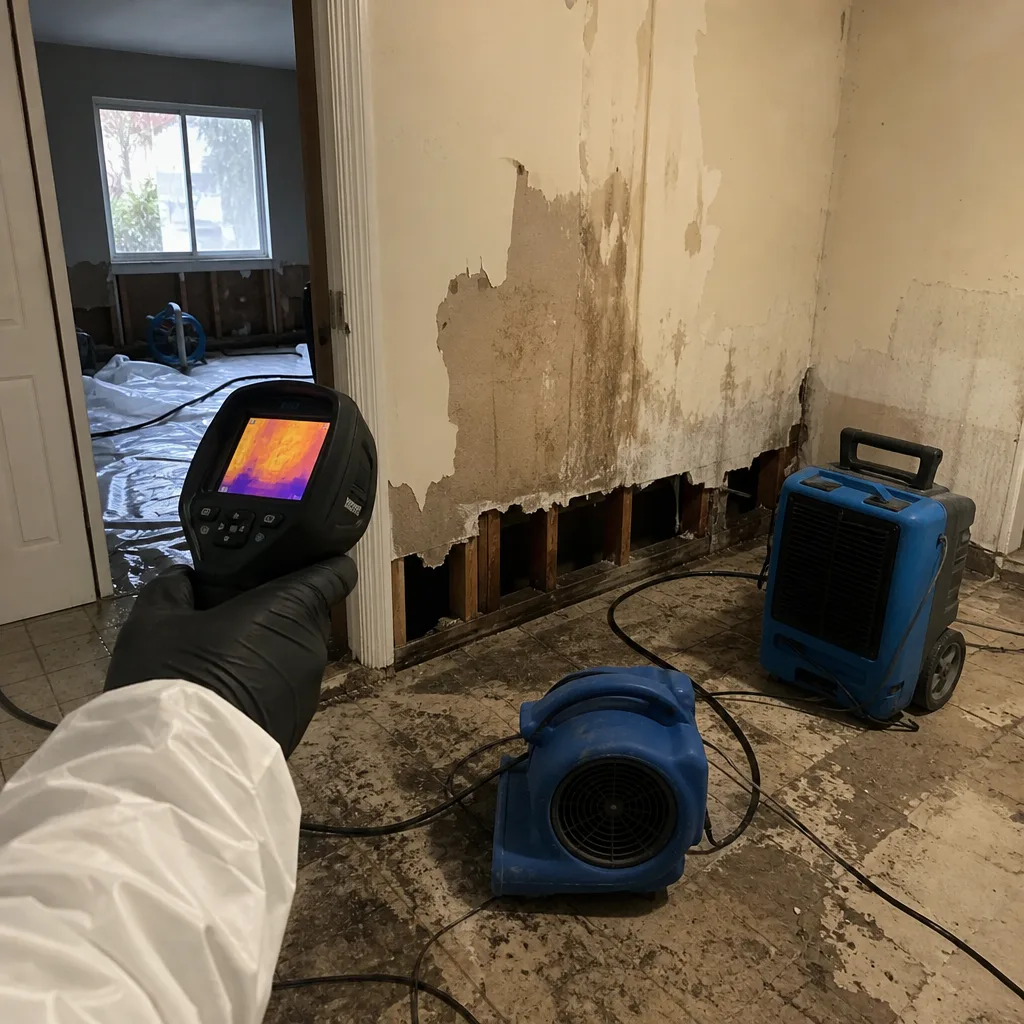
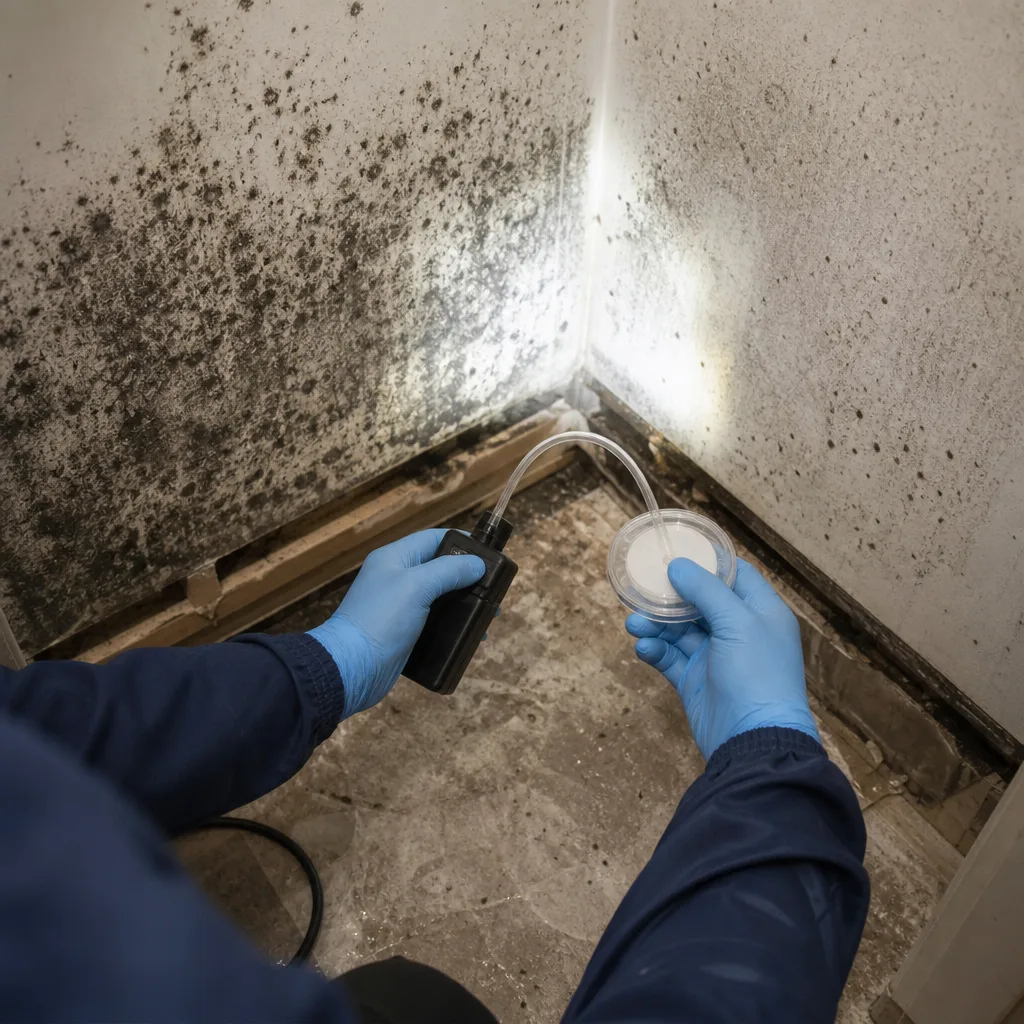
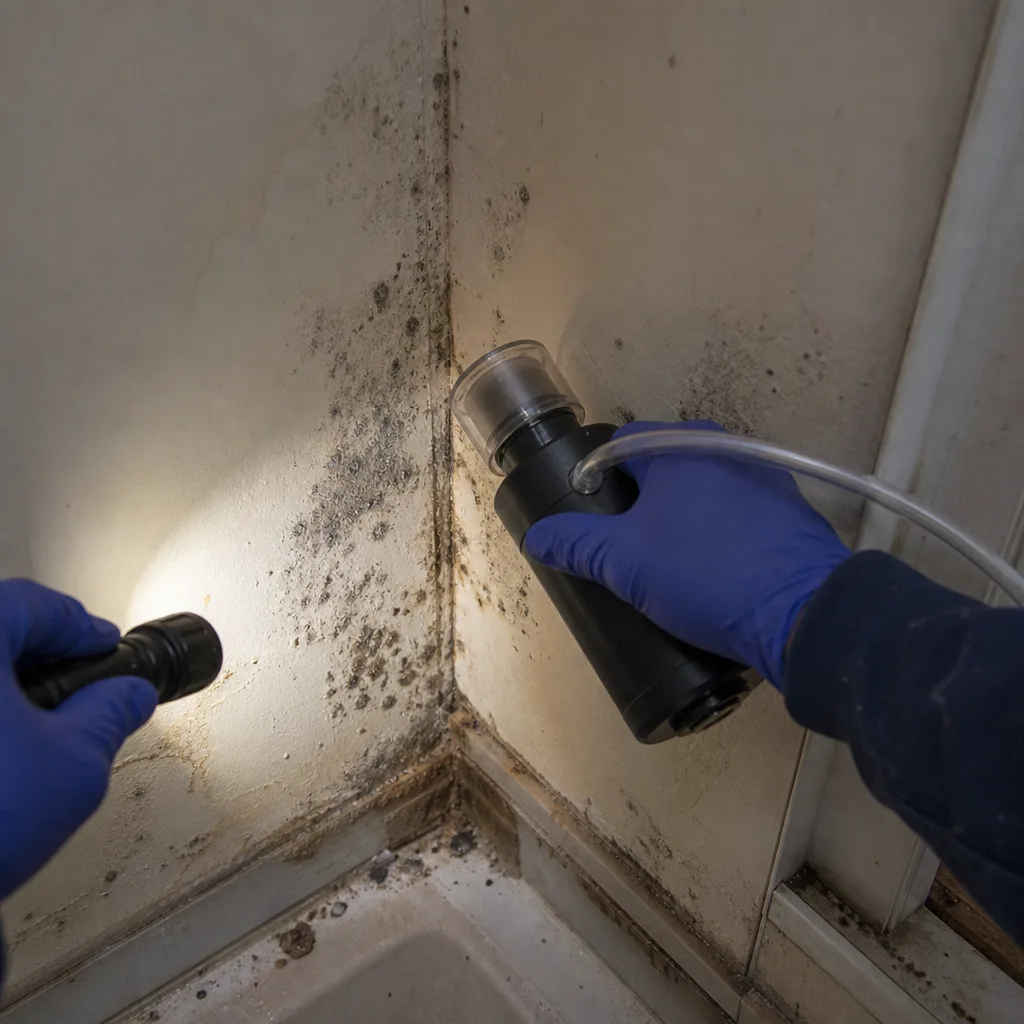
A proper mold inspection in Downey starts with moisture mapping, not guesswork. We use thermal imaging and penetrating moisture meters to find the water source, because mold without moisture is a symptom, not a disease. In Downey’s slab-on-grade ranches, we check slab temperature differentials and test wall cavities with borescopes - the same tools we document to IICRC and RIA standards. Air sampling and surface swabs go to a third-party lab; we don’t perform our own testing to avoid conflict of interest. You’ll receive the lab report, our moisture readings, and a written scope with a fixed price before any work begins. Haven Standard, Clause 1.
Mold Removal
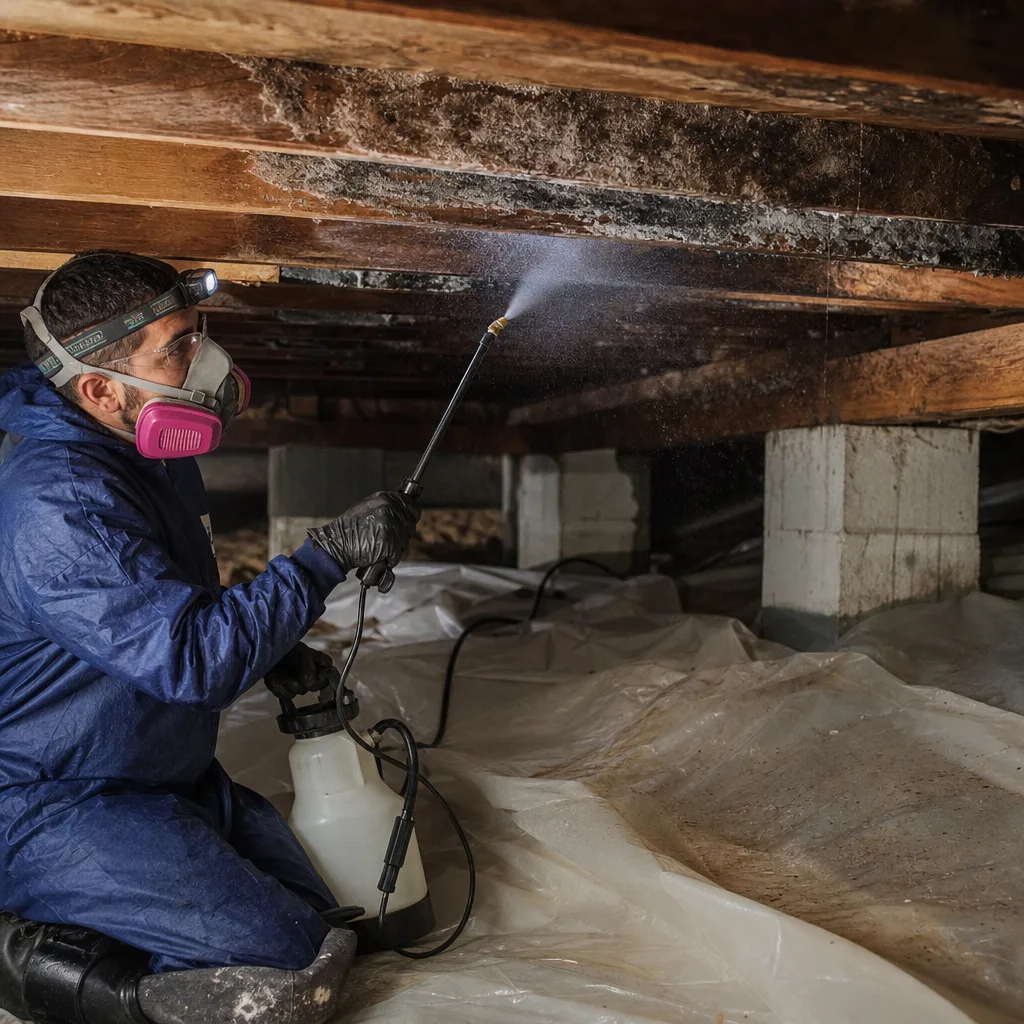
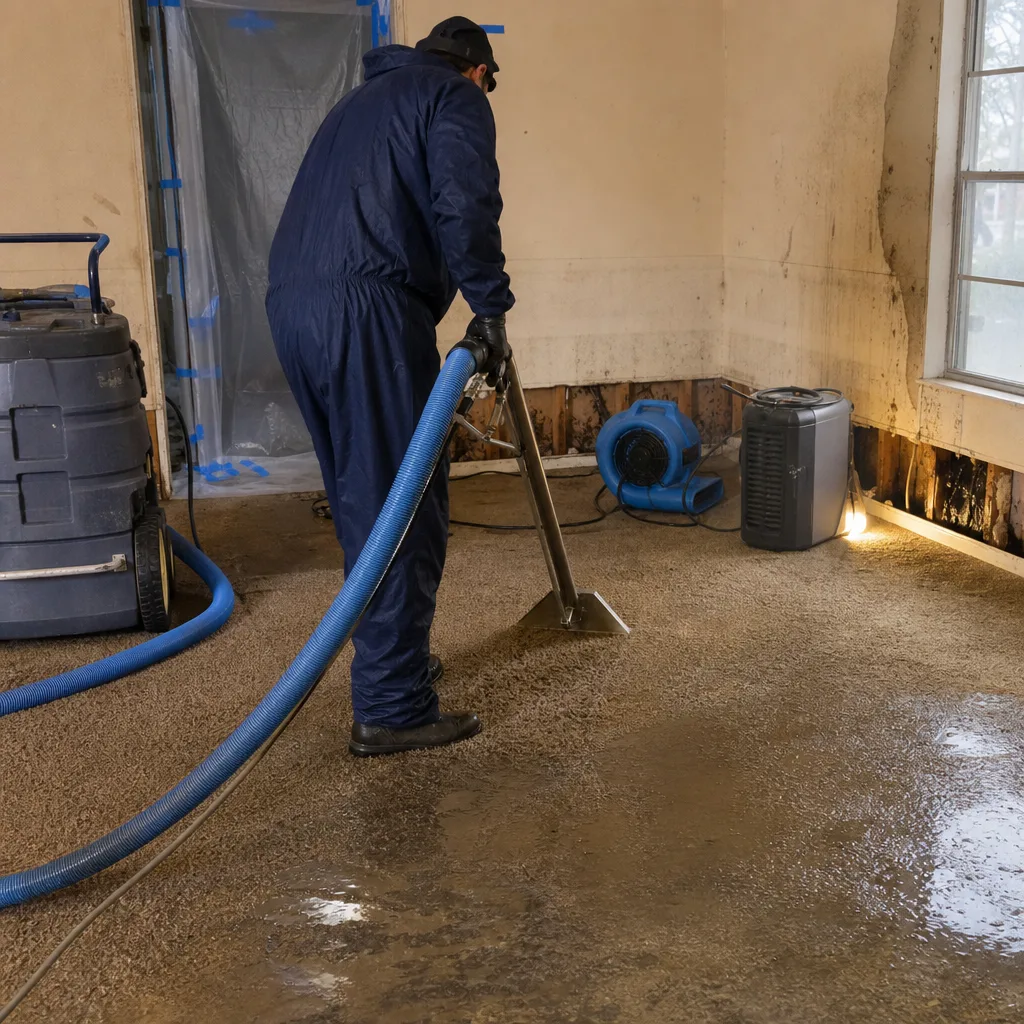
Removal in Downey follows containment protocols that account for the city’s asbestos legacy. We erect polyethylene containment with negative air pressure before disturbing any wall or floor cavity, because the 9×9 floor tiles common in Downey’s 1950s-1960s construction are chrysotile-positive at rates that local abatement contractors treat as the default assumption. Our technicians are background-checked, uniformed, and carry license numbers you can verify. Every removal job includes a photo record of containment setup, debris removal, and the post-remediation visual inspection. No work proceeds without a written price agreed in advance.
Black Mold Remediation
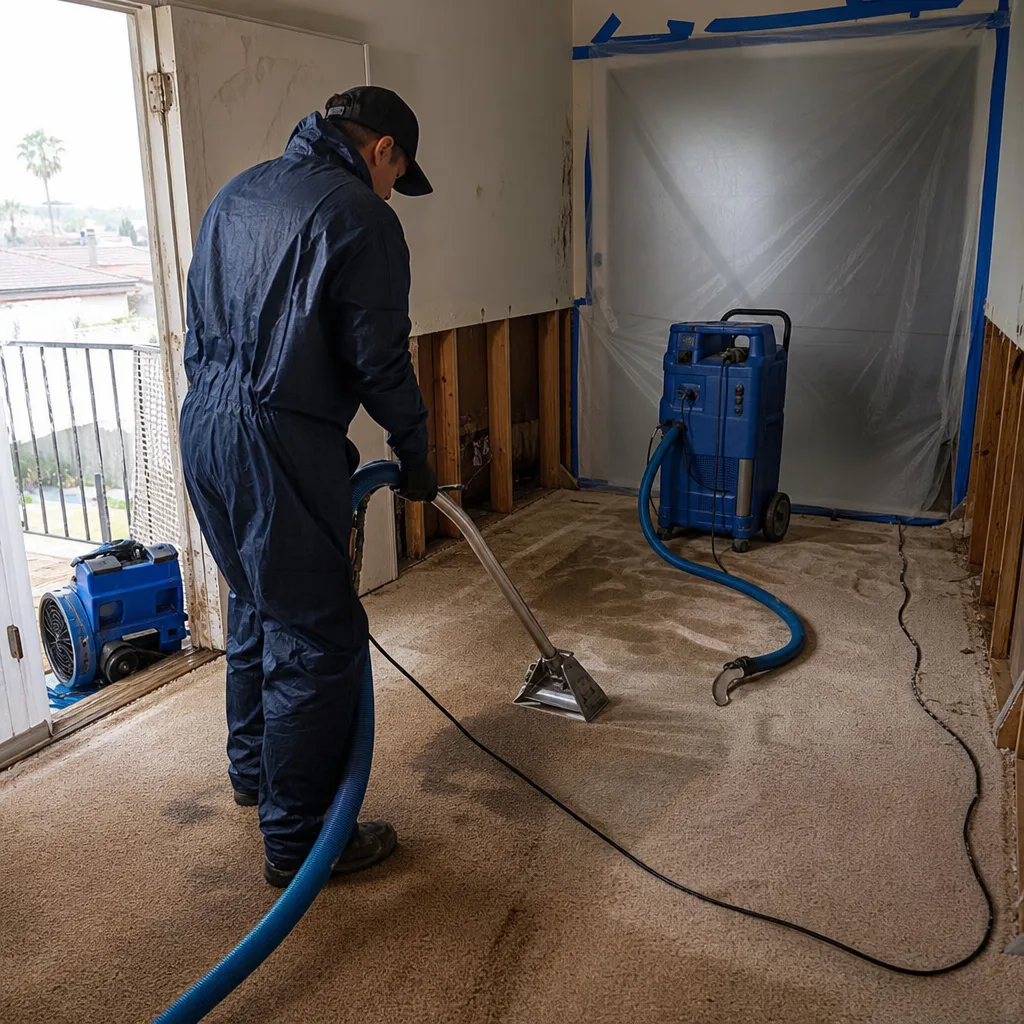
Stachybotrys chartarum - the species most homeowners mean by “black mold” - requires the same containment rigor as asbestos work in Downey homes, because the two hazards frequently coexist. We treat suspected black mold with full PPE, HEPA-negative air machines, and sealed waste transport. The critical difference in Downey is the pre-work hold: if the mold sits behind baseboards or under flooring that covers 9×9 tiles, the asbestos consultant must clear the site before our containment goes up. This sequencing adds 24-72 hours to the timeline, but skipping it risks a County stop-work order and cross-contamination of the living space. We build this into our written scope so you’re not surprised by a mid-project delay.
Air Quality Restoration
After remediation, we don’t declare the job done when the mold is gone. Air quality restoration means HEPA filtration runs until particle counts drop to ambient levels, verified with laser particle counters. In Downey’s tightly sealed slab homes with no crawlspace ventilation, this phase takes longer than in properties with subfloor air exchange. We log the readings, match them against outdoor baseline measurements, and include the data in your final documentation package - the same documentation that satisfies insurers and the 365-Day Done Right Promise under The Haven Standard.
Moisture & Humidity Control
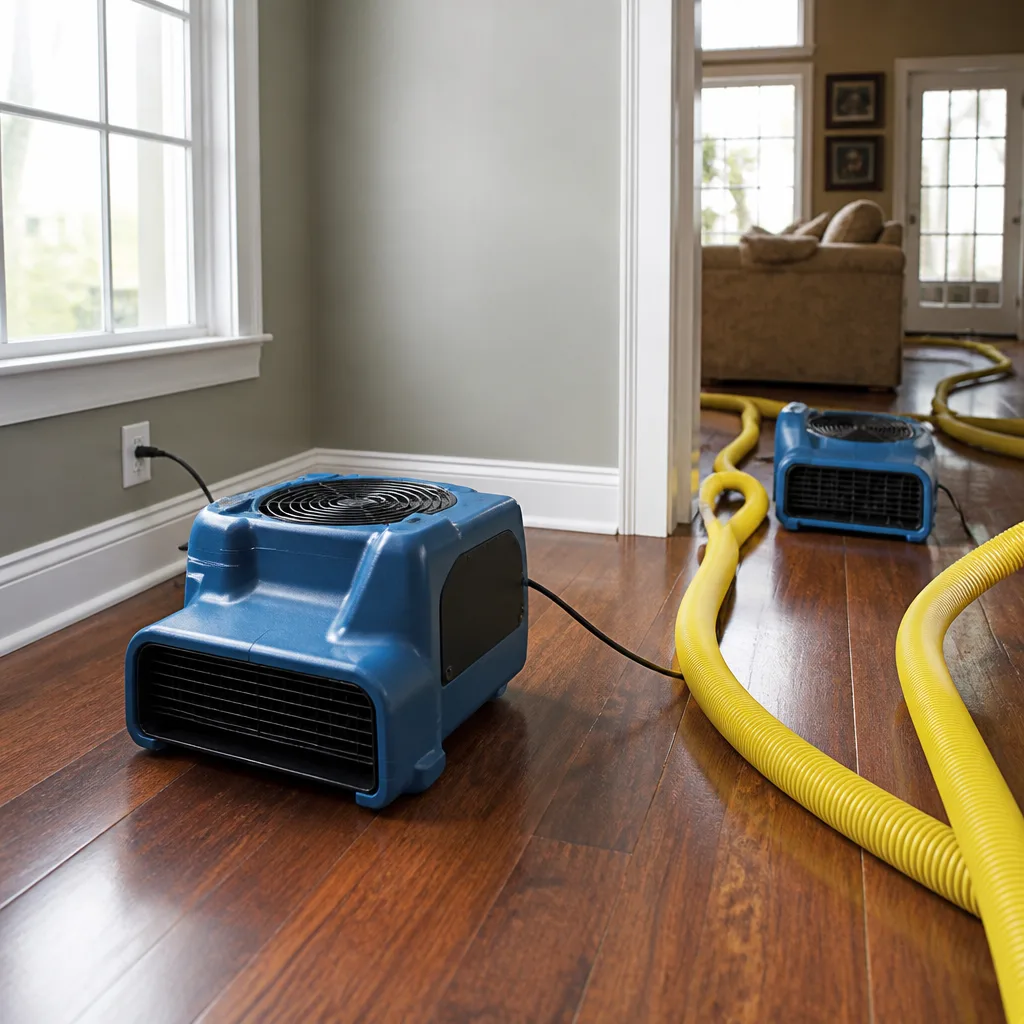
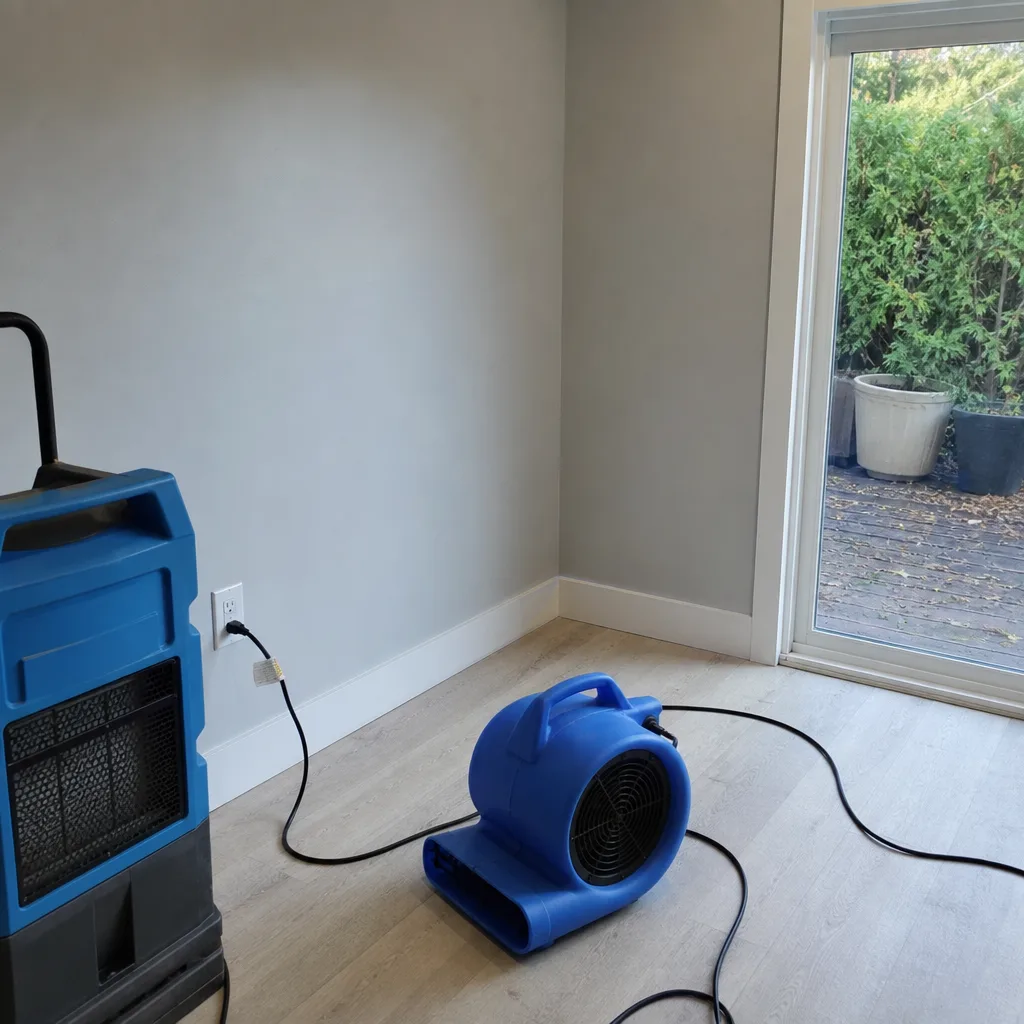
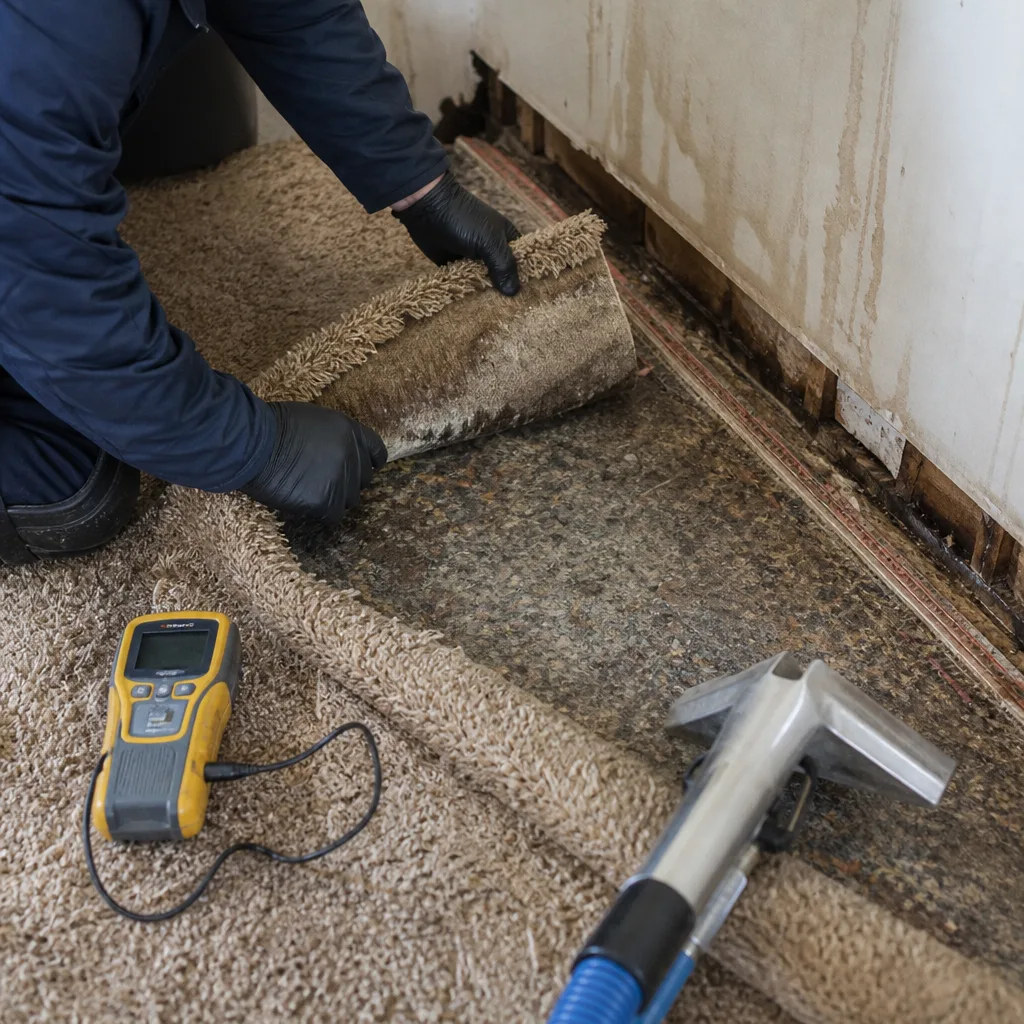
Controlling moisture in a Downey slab home means addressing the slab itself, not just the air. We deploy Dri-Eaz and Phoenix dehumidifiers with Injectidry slab drying panels that pull moisture from within the concrete, not just across the surface. Psychrometric data - temperature, relative humidity, and vapor pressure differential - gets logged daily to a drying record that shows exactly when the slab returned to pre-loss equilibrium. Without this documentation, an insurer can deny the rebuild phase. With it, the invoice moves through claims without dispute. This is why Back to Dry was built by a former adjuster: we know what documentation gap costs a homeowner their coverage.
What happens when you call
- 1
A real person answersNo phone trees - you reach a local pro.
- 2
You get an upfront price rangeHonest numbers before anyone is dispatched.
- 3
A background-checked tech heads outLicensed & insured, dispatched right away.
- 4
You approve before work beginsNothing starts until you say go.
 Before
 After
AfterTrusted Brands We Service in Downey
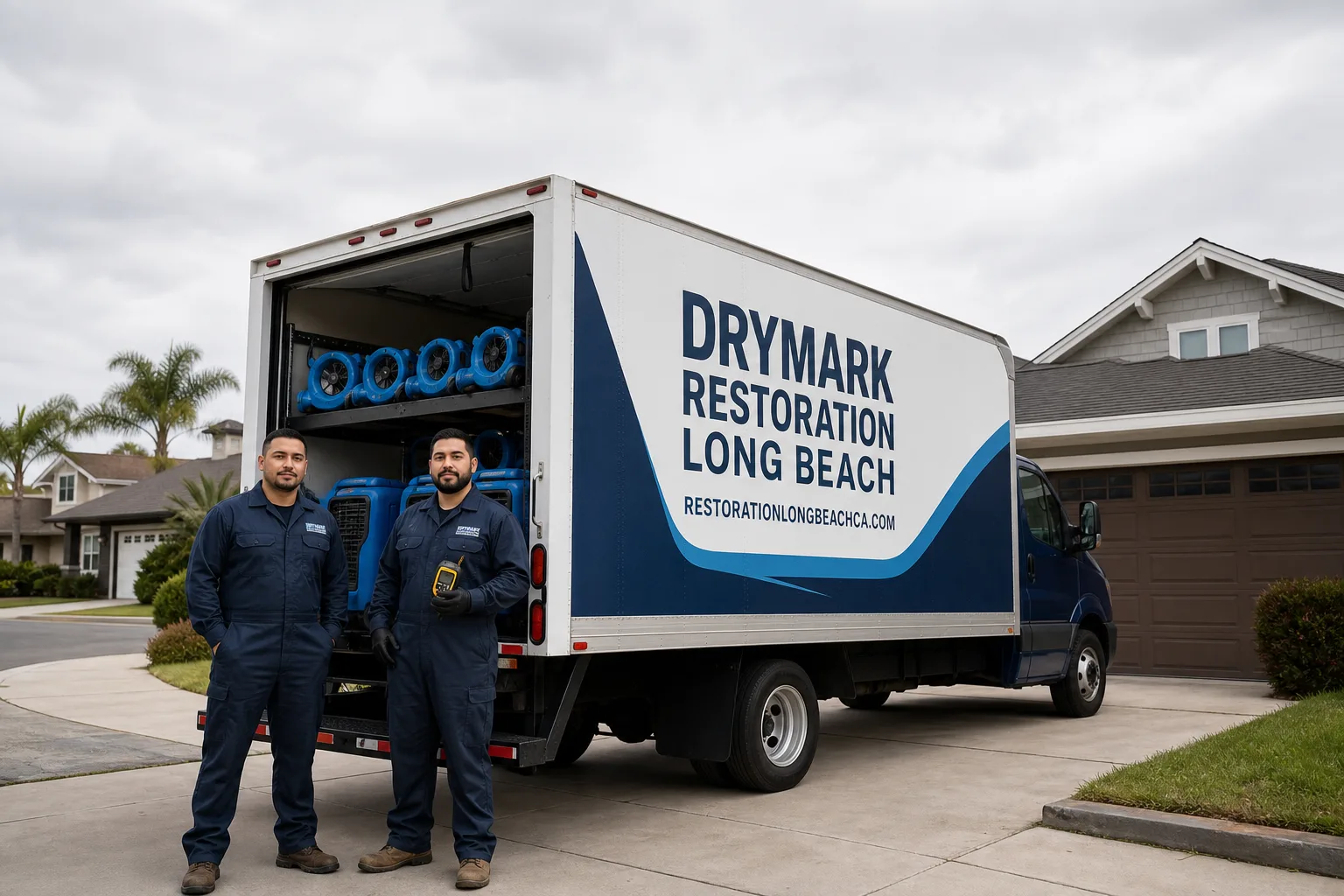
Our equipment fleet runs on Dri-Eaz, Phoenix, and XPOWER systems - the same brands specified in most commercial insurance restoration protocols. We stock HEPA filtration units, negative air machines, and dehumidification capacity locally, so Downey jobs don’t wait for rental availability. When a slab leak hits a kitchen on Lakewood Boulevard or a bathroom in the Stonewood Center area, we can have containment materials and drying equipment on-site within the response window, with the daily moisture logs that turn restoration invoices into payable claims.
Common Mold Remediation Problems We See in Downey Homes
- Slab leaks saturating vinyl flooring with no escape route. Downey’s slab-on-grade construction means water from a failed galvanized or copper supply line spreads under the entire floor plate. Surface moisture readings can read dry while the slab holds water, and mold colonizes the vinyl backing within 48-72 hours. Without a crawlspace to ventilate, the only drying path is through the concrete itself, which requires Injectidry panel systems and extended dehumidification cycles.
- Asbestos-containing 9×9 floor tiles delaying every tear-out job. The 1950s-1960s tracts off Paramount Blvd and Firestone Boulevard almost always test positive for chrysotile asbestos in original floor tiles and duct wrap. Starting demolition without clearance is a legal violation that triggers County stop-work orders and potential contamination of the entire structure. We build asbestos assessment into every Downey scope as a mandatory Phase 1.
- Misclassified flood water from Rio Hondo channel intrusion. Streets near the western boundary of Downey can take water that carries sediment, hydrocarbons, and biological material from the channel. Category 1 clean water calls that arrive with channel staining get reclassified to Category 2 or 3, which changes what materials can be dried versus what must be removed. Misclassifying this spreads contamination into the rebuild and voids insurance coverage for subsequent mold growth.
- Contractors who start air movers before containment is verified. The rush to “dry it out fast” in Downey’s emergency calls often means disturbing asbestos-containing materials without negative air pressure, sending fibers through the HVAC system. Our protocol holds on mechanical drying until the asbestos consultant clears the site and our containment is photographed, logged, and sealed.
Pricing for Mold Remediation in Downey, CA
Mold inspection and testing in Downey runs $450-$850, depending on the number of samples and the square footage of moisture mapping. Contained spot removal for a single bathroom or closet area typically costs $1,200-$2,400. Whole-room remediation with full containment, HEPA-negative air, and disposal runs $2,800-$6,500. Asbestos assessment and abatement coordination, required on most Downey jobs involving pre-1969 construction, adds $800-$2,200 depending on the number of affected materials and the consultant’s scheduling.
What moves the price: the extent of hidden moisture in the slab, the presence of asbestos-containing materials requiring phased work, the category of water that caused the mold growth, and whether the job requires full reconstruction or just remediation. Every price is delivered in writing before work begins, with no additions once the crew is inside. Haven Standard, Clause 1. Bring a competitor’s written estimate and we’ll review it at no charge - our Free Second Opinion.
We Also Serve Cities Near Downey
Our crews handle Mold Remediation in Downey and the surrounding corridor, including Paramount, Bellflower, Norwalk, and Cerritos. Each city has different housing stock and different regulatory considerations, but the same documentation standard: written price first, photo record on every visit, and the 365-Day Done Right Promise on every job.
Serving Downey, CA - Our Local Coverage Area
We’re based in the Downey area and know this community well. Use the map below to see our service coverage - if you’re nearby, we can almost certainly help.
FAQs - Mold Remediation in Downey
Downey’s 1950s-1968 slab-on-grade housing stock almost always contains asbestos in original 9×9 floor tiles and duct wrap, which legally requires assessment and abatement coordination before demolition or drying can begin. Neighboring cities with more mixed construction eras and post-1970s housing face this requirement less frequently. The two-phase process - asbestos clearance, then remediation - adds 24-72 hours to most Downey timelines, but skipping it risks County enforcement action and cross-contamination. Call (424) 373-5092 for a written scope with realistic scheduling.
Within 48 hours. In Downey’s slab homes, water trapped under vinyl with no crawlspace ventilation creates active mold growth on the backing material within two days. After that point, the vinyl and any affected substrate must be treated as contaminated, not merely wet. We respond to Downey calls in 45-90 minutes, but the asbestos assessment still precedes any tear-out - so calling earlier preserves more options for less invasive drying. Call (424) 373-5092 to get moisture mapping started today.
We stop and engage a licensed asbestos consultant for sampling and clearance before any disturbance of suspect materials. This is non-negotiable under California Code of Regulations Title 8 and LA County Environmental Health rules. The consultant’s report becomes part of your documentation package, and our written scope includes the asbestos phase with its separate pricing and timeline. We do not proceed with containment setup until we hold written clearance. Haven Standard, Clause 1 applies to both phases: a written price before any work starts.
Sometimes, if the water incident is caught within 24-48 hours and surface moisture readings haven’t penetrated to the slab core. We use Injectidry panels and targeted dehumidification to pull vapor from within the concrete, logging daily psychrometric data until the slab returns to pre-loss equilibrium. But if the vinyl backing shows mold growth, or if moisture has wicked into baseboards and wall cavities, removal of affected materials is required - and if those materials cover 9×9 tiles, asbestos clearance comes first. The written scope we deliver before work begins specifies which approach applies to your situation.
Yes. Properties in the FEMA Special Flood Hazard Areas near the channel may take water that carries channel sediment, hydrocarbons, and biological loading, which reclassifies the water from Category 1 to Category 2 or 3. This changes what materials must be removed versus what can be dried, and it affects the antimicrobial protocol and disposal requirements. We test water source and document the classification in your photo record, because insurers deny claims when Category 3 jobs are billed as Category 1. Call (424) 373-5092 if you’ve taken water near the channel - we’ll assess and scope it properly.
Ready to get started? Call (424) 373-5092 for a free estimate. We’ll send a technician to your Downey property, map the moisture, identify any asbestos-containing materials that will affect the scope, and deliver a written price before any work begins. Every job is covered by our 365-Day Done Right Promise under The Haven Standard.
Written by Alicia Brennan, Owner at Back to Dry Restoration, serving Downey since 2011.