
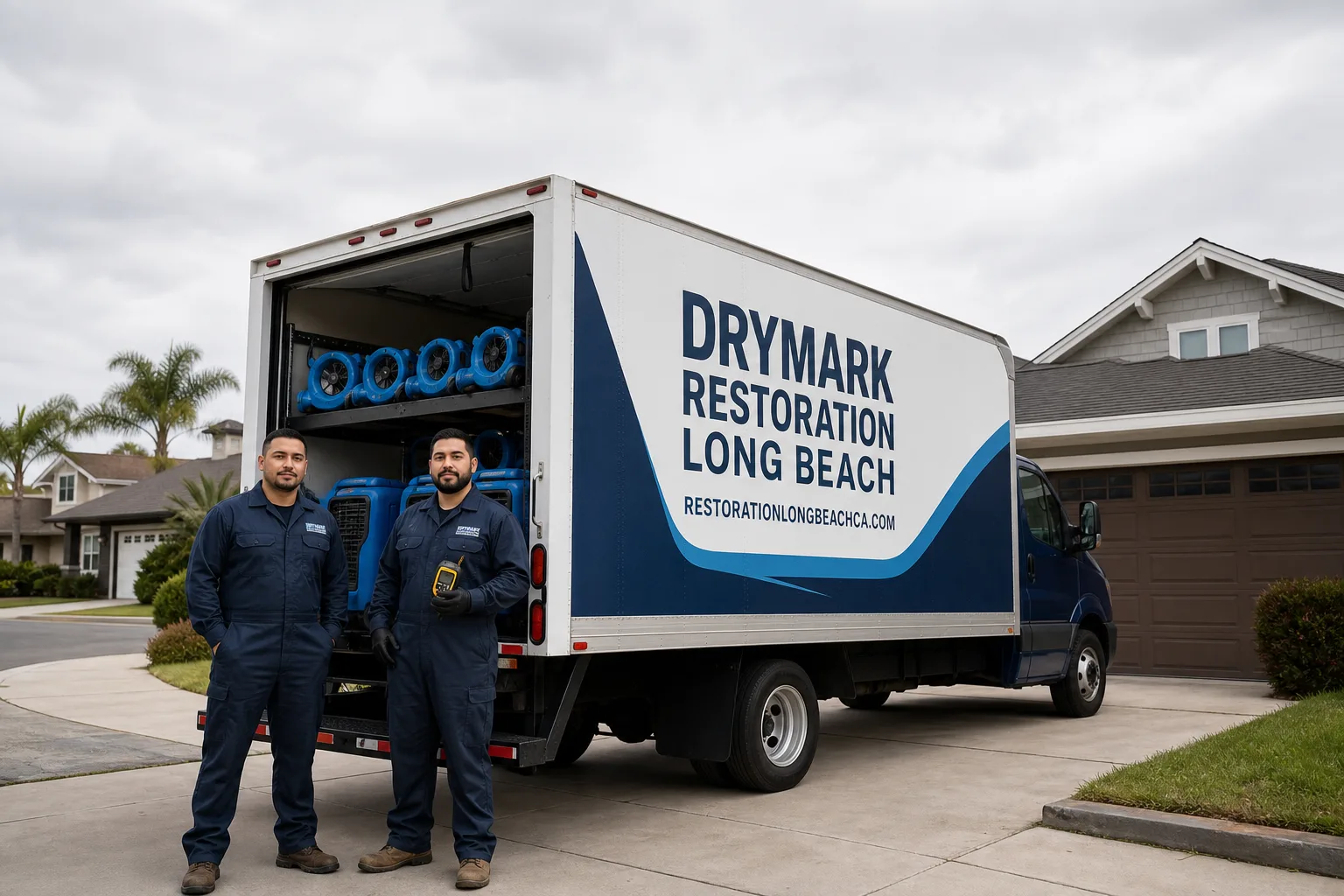
Free visual inspection and a written scope of work before any mitigation begins - photos, moisture readings, and drying logs go in your claim file
The scope we write is the scope we bill. Anything new gets shown to you, in writing, before we touch it.
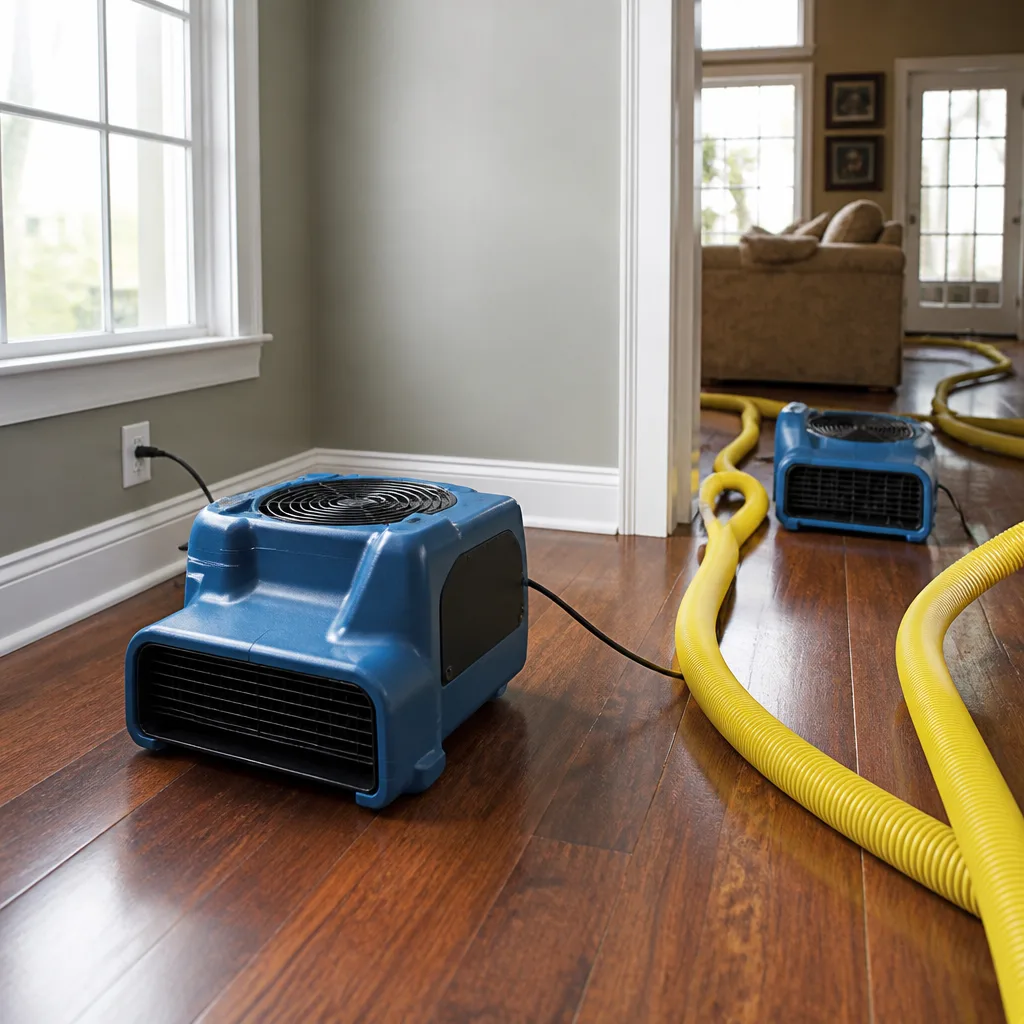
 Before
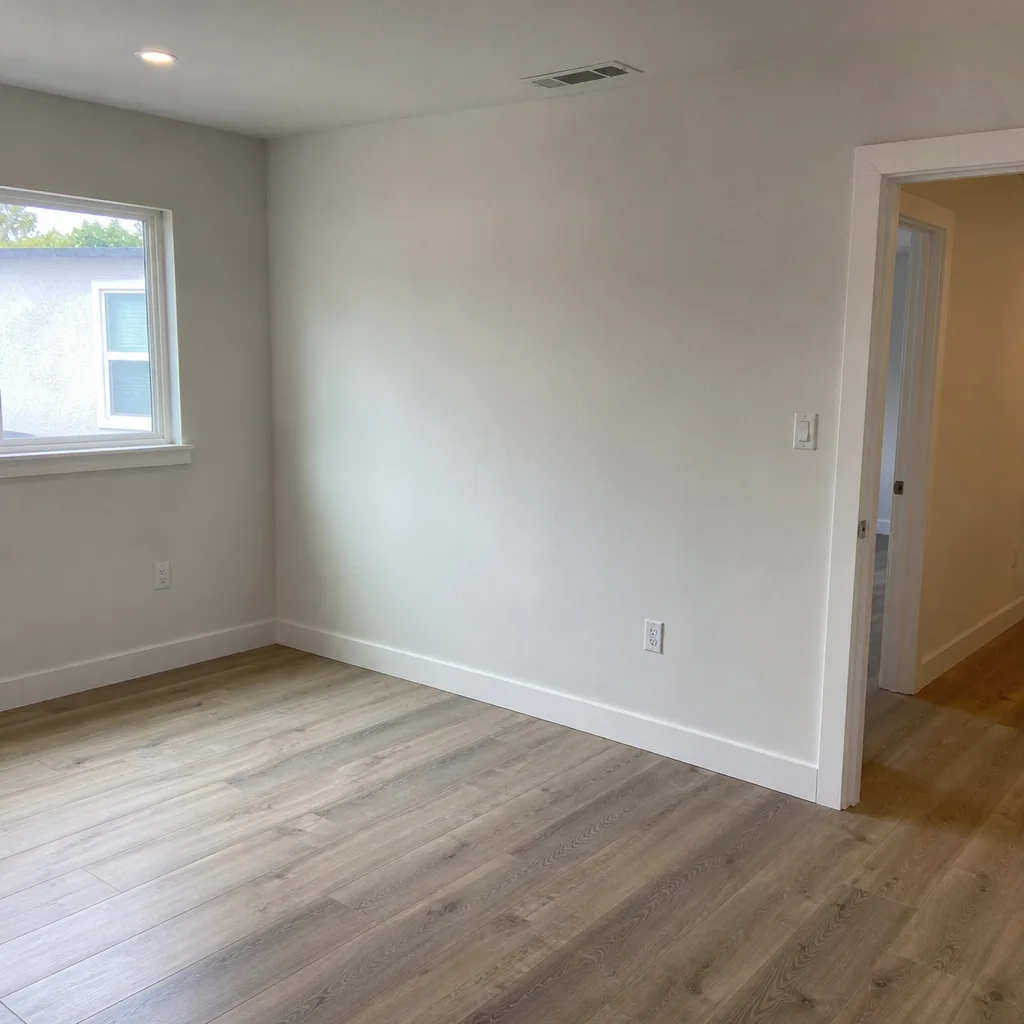 After
After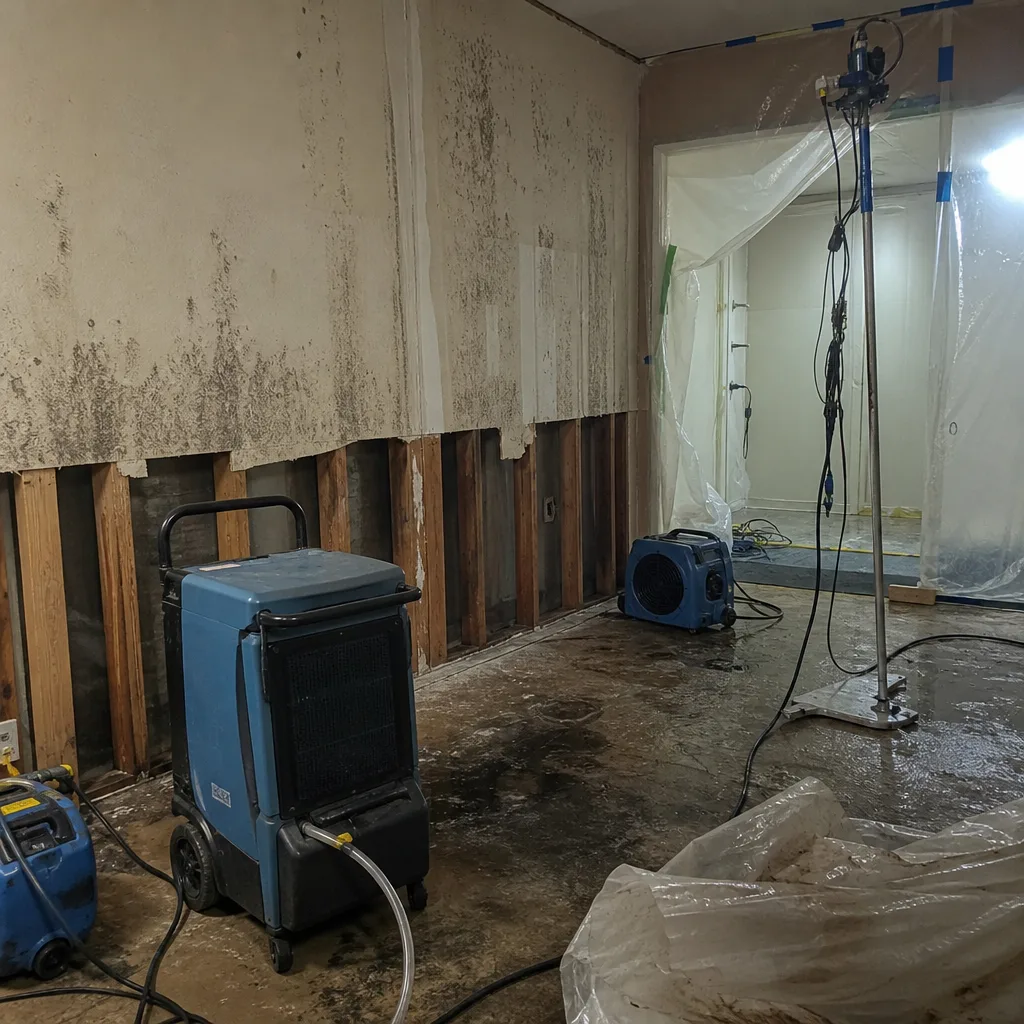 Before
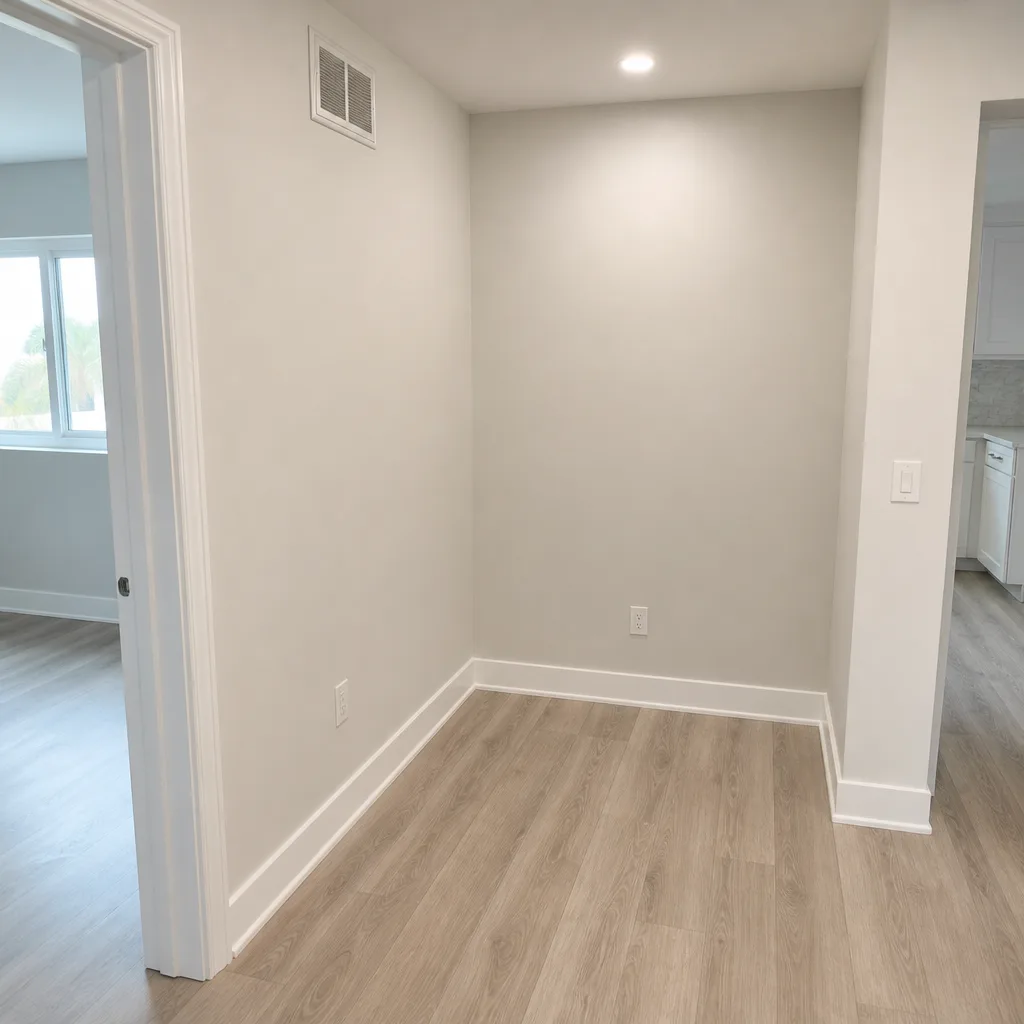 After
After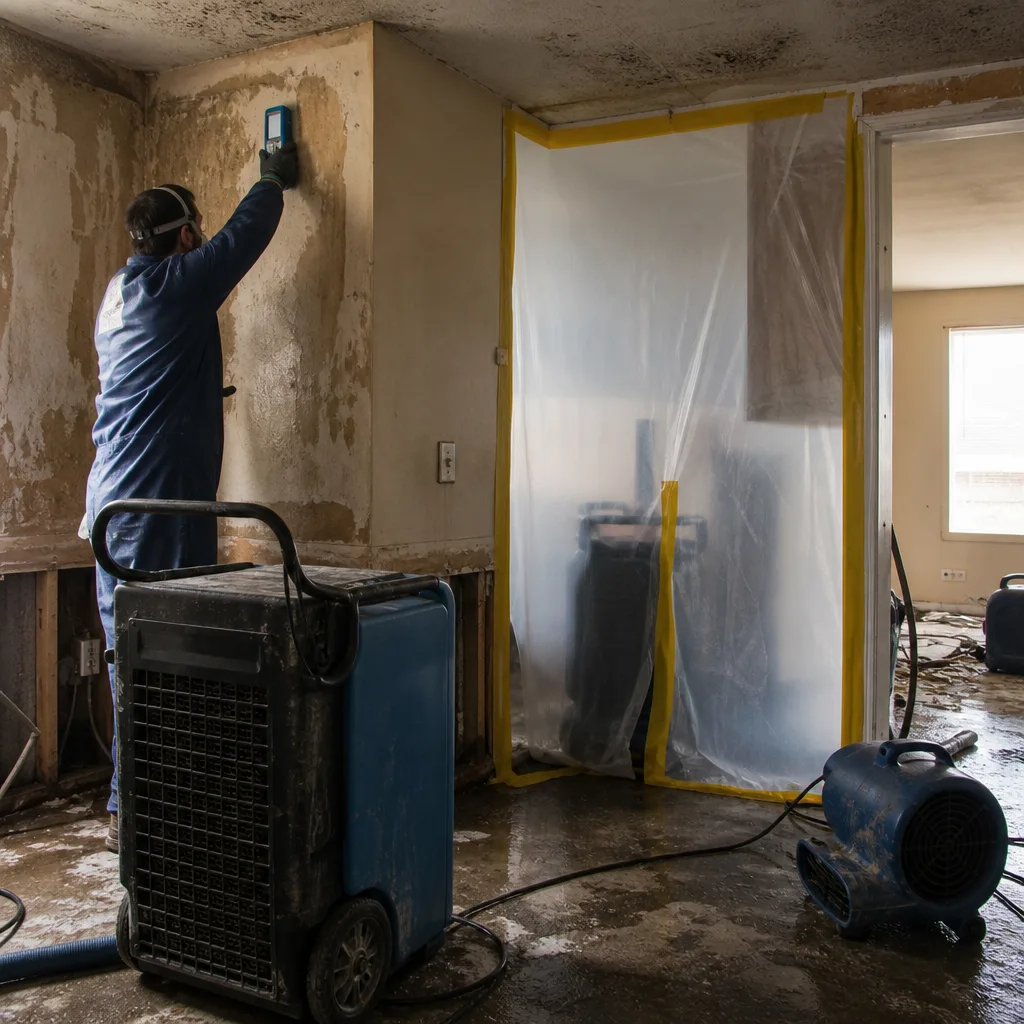 Before
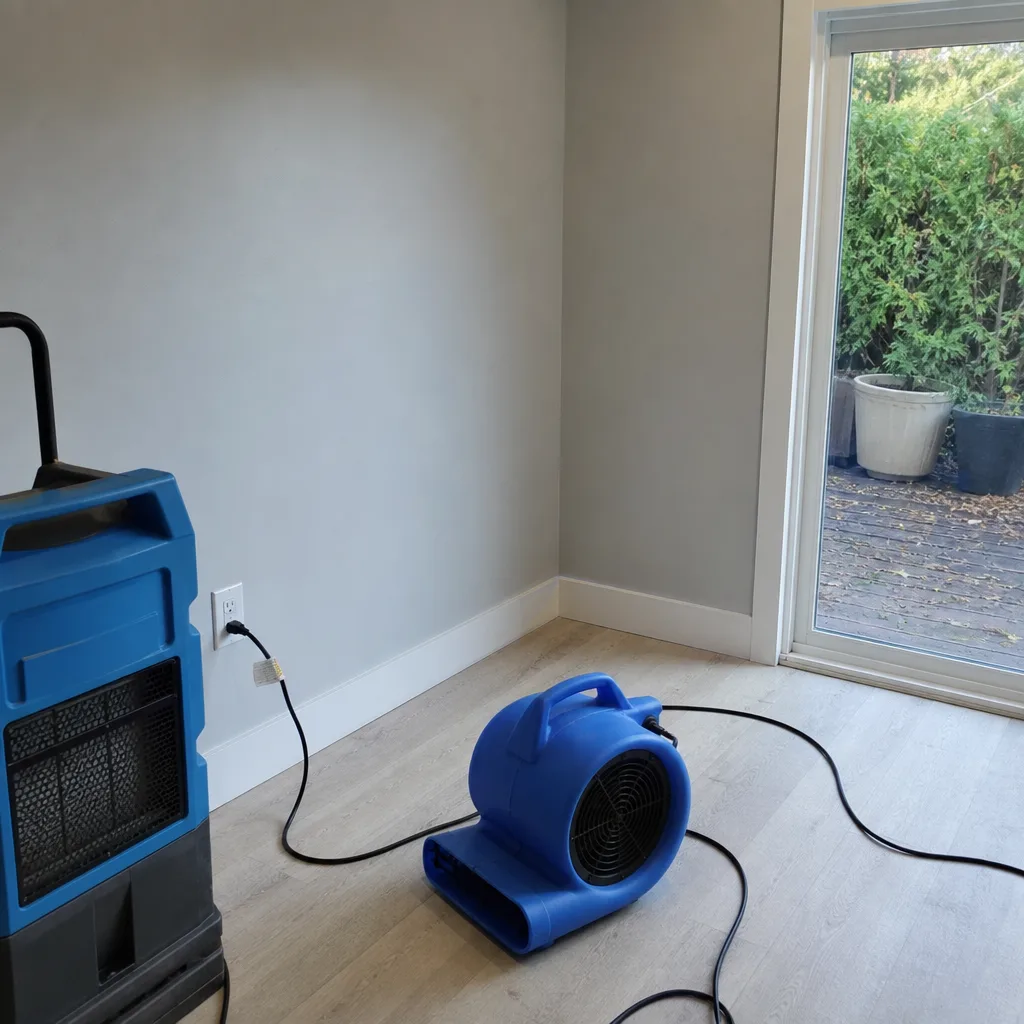 After
AfterFast, Reliable Water Damage Restoration Across Huntington Beach
Water damage restoration in Huntington Beach typically costs $2,800-$6,500 for a standard residential mitigation, with emergency extraction starting at $1,200-$2,400 and full structural drying running $1,600-$4,100 depending on affected square footage and material classification. Most emergency calls in Huntington Beach receive a live-answered response within the hour, and our crews carry the equipment to begin extraction on arrival.
We serve Huntington Beach from our Los Angeles office, with dispatch coordinated specifically for Orange County response corridors. Our Water Damage Restoration team knows the local housing stock: the 1950s-1970s wood-frame stucco tract homes with slab foundations that dominate neighborhoods from Adams Avenue to Huntington Harbour, and the coastal condo complexes with flat roofs and shared-wall moisture pathways near Pacific Coast Highway. That familiarity matters when a crew walks through your door at 2 a.m. and needs to distinguish a fresh intrusion from chronic salt-air moisture wicking that’s been building behind your stucco for years.
Call (424) 373-5092 now. A live person answers, 24 hours a day, 7 days a week. No voicemail trees. No next-business-day callbacks while water is still moving through your subfloor.
Why DryMark Restoration Long Beach Is Huntington Beach’s Preferred Water Damage Restoration Company
We’ve restored homes in Huntington Beach since 2011, and our file on this city is specific. We know that a water-loss call from a methane-designated zone off Beach Boulevard requires a different scope preamble than a similar loss in Seal Beach. We know the marine layer that blankets Huntington Beach from May through September keeps interior relative humidity elevated well above inland Orange County norms, which means mold colonization inside water-damaged wall cavities can reach actionable levels within 24-36 hours. Crews who don’t account for that compression in their drying plan routinely return to containment jobs they could have prevented.
Our reviews from Huntington Beach customers consistently cite two things: the written price delivered before anyone starts work, and the photo-documented record they receive on every visit. Haven Standard, Clause 1: written price before work begins. No exceptions. The photo record is standard, never an upsell.
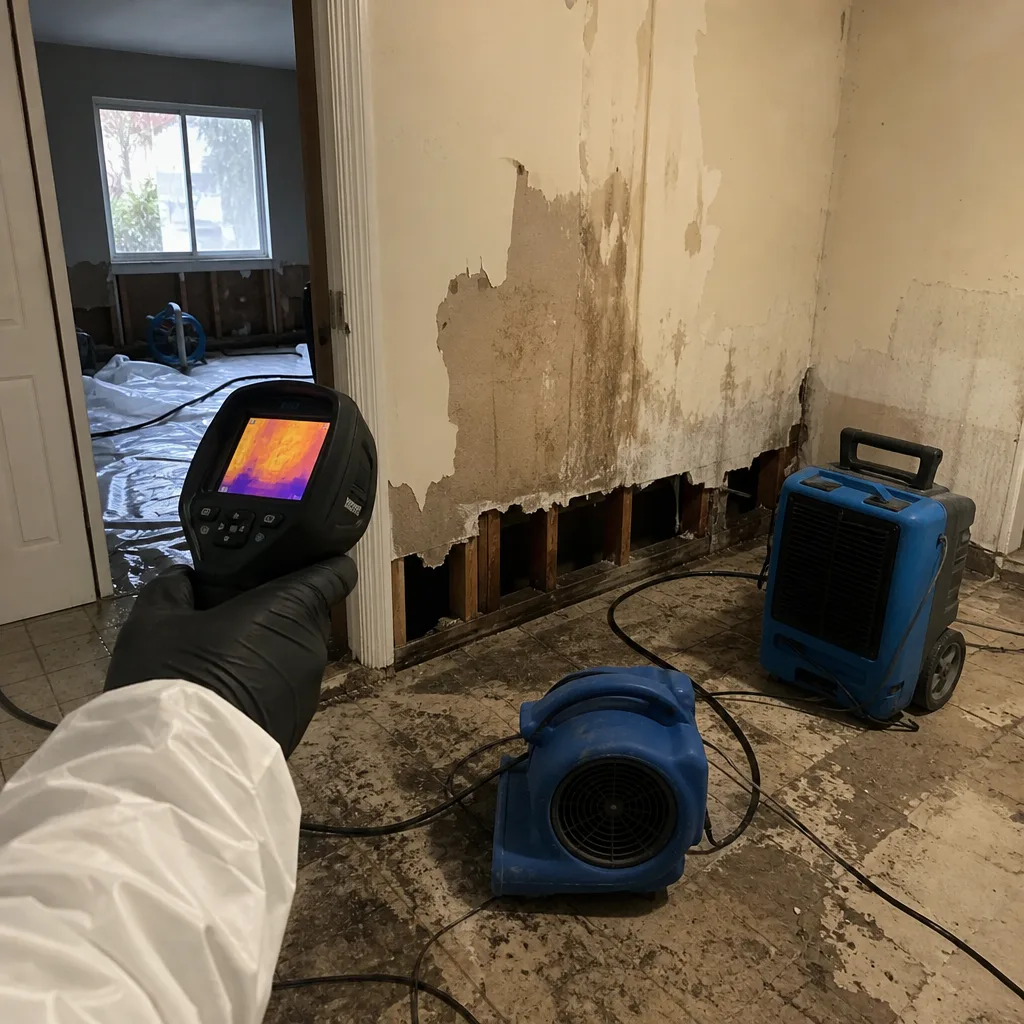
Response time to Huntington Beach averages under 60 minutes for emergency calls, with crews carrying Dri-Eaz and Phoenix drying systems pre-loaded for immediate deployment. We don’t send a salesperson to “assess” while your baseboards swell. We send technicians with moisture meters, thermal imaging, and the authority to begin extraction.
Alicia Brennan built this company around the documentation gap that costs homeowners their insurance claims. That origin shapes every Huntington Beach job we run: daily drying logs, room-by-room moisture readings, and a written scope that turns your restoration invoice into a claim your adjuster pays without a fight.
Our Water Damage Restoration Services in Huntington Beach
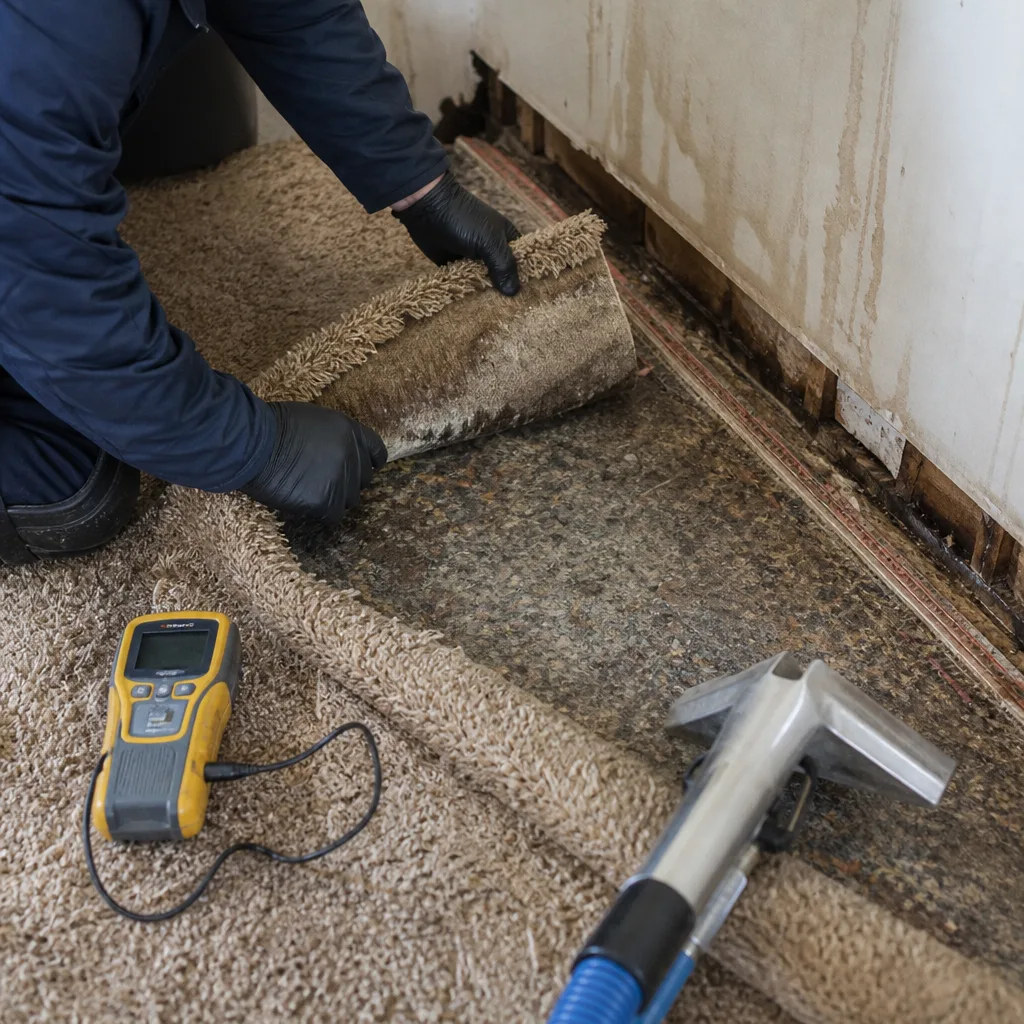
Emergency Water Extraction
Speed matters most in the first hours. Our emergency water extraction teams in Huntington Beach arrive with truck-mounted extraction units and portable flood pumper systems sized for everything from a failed dishwasher in a Bolsa Chica condo to a full first-floor flood in a Central Park tract home. We extract standing water first, then deploy weighted extraction tools on saturated carpet and pad to pull retained moisture before it migrates to subflooring. In Huntington Beach’s slab-foundation homes, that migration happens fast - there’s no basement to absorb the overflow, and water follows the path of least resistance across concrete and into wall cavities.
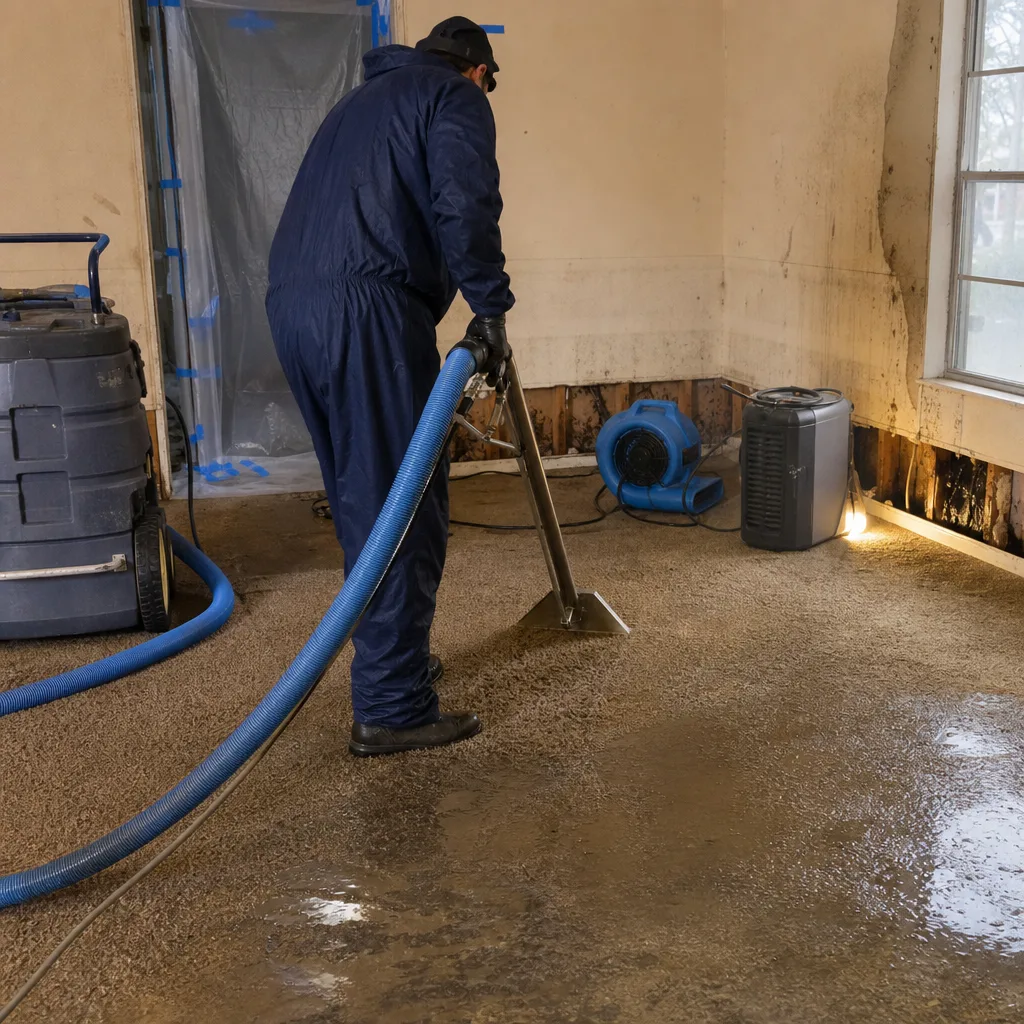
Structural Drying & Dehumidification
This is where Huntington Beach’s coastal environment changes the math. Standard drying protocols written for inland climates fail here because the marine layer keeps ambient humidity high enough that air movers alone won’t achieve vapor pressure differential - the measurable force that pulls moisture out of wet materials and into the air where dehumidifiers can capture it. We deploy Phoenix dehumidifiers alongside Dri-Eaz air movers in calculated ratios based on psychrometric data: temperature, relative humidity, and specific humidity readings taken every 24 hours. Our daily drying logs document each reading, and we don’t call a structure dry until moisture content in wood framing reads below 16% and drywall below 1% - not when it “feels dry,” but when the numbers prove it.
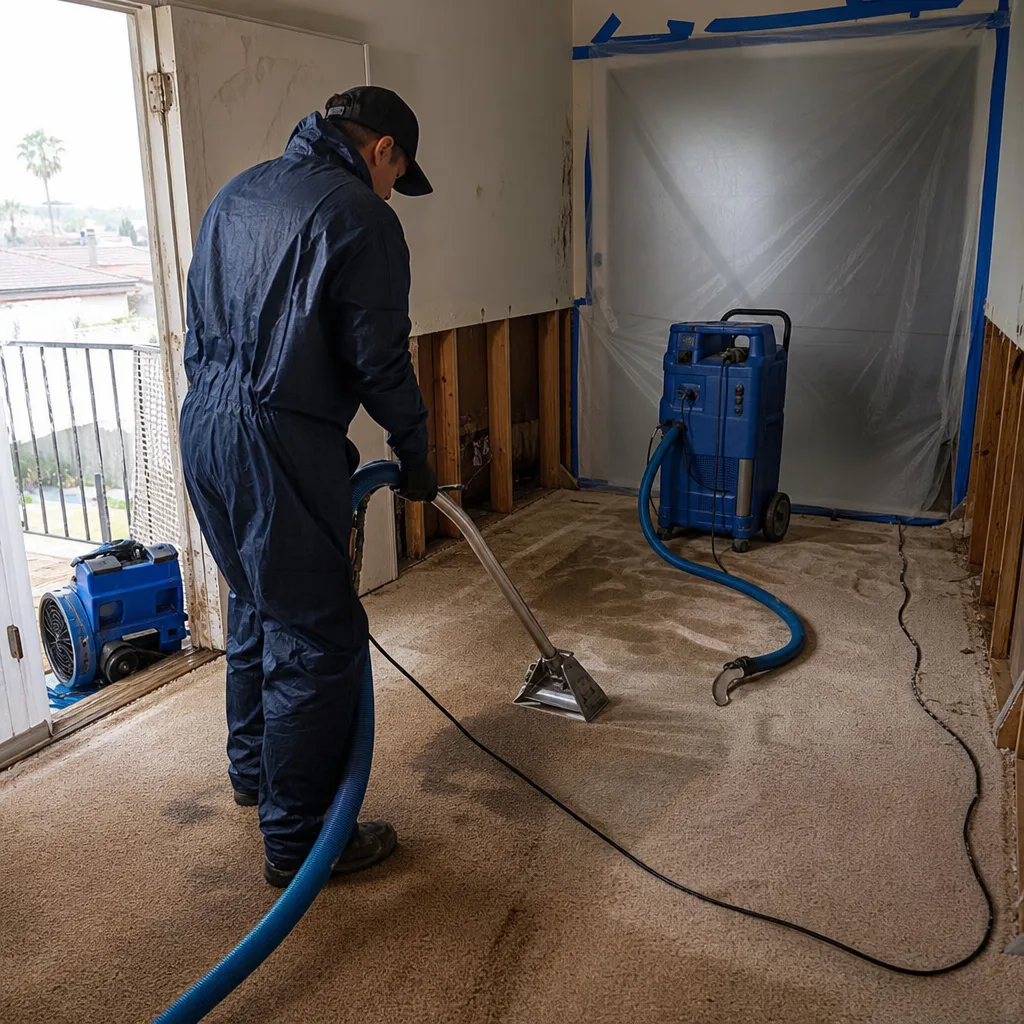
Flood Cleanup
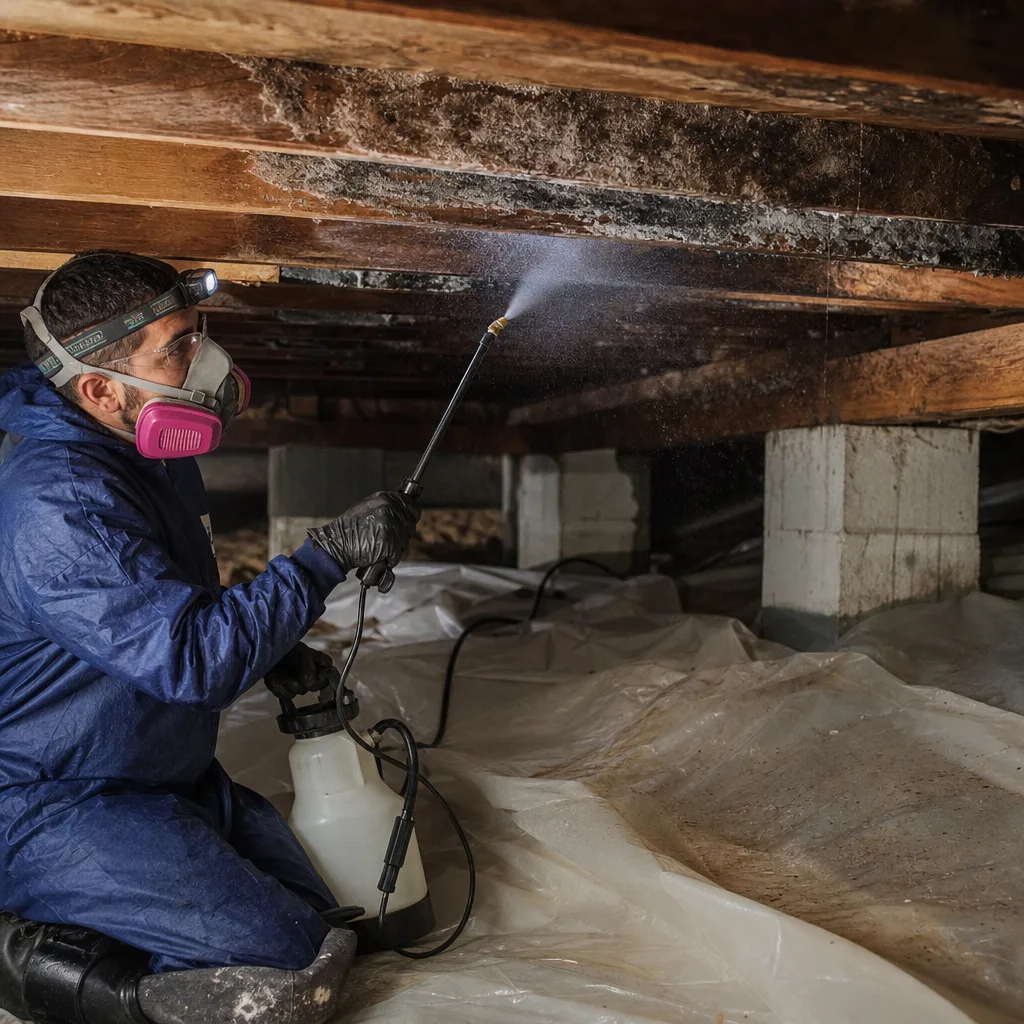
Huntington Beach flood cleanup runs from seasonal storm surges pushing water into low-lying neighborhoods near the Santa Ana River to irrigation system failures flooding yards that drain back toward slab foundations. We classify floodwater by contamination level: Category 1 (clean source), Category 2 (gray water with chemical or biological load), or Category 3 (black water with sewage or toxic contaminants). That classification determines PPE requirements, antimicrobial protocols, and whether porous materials must be removed. In Huntington Beach’s older tract homes with original drywall and minimal vapor barriers, Category 2 water often forces removal of lower wall sections because the material can’t be sanitized in place.
Burst Pipe Restoration
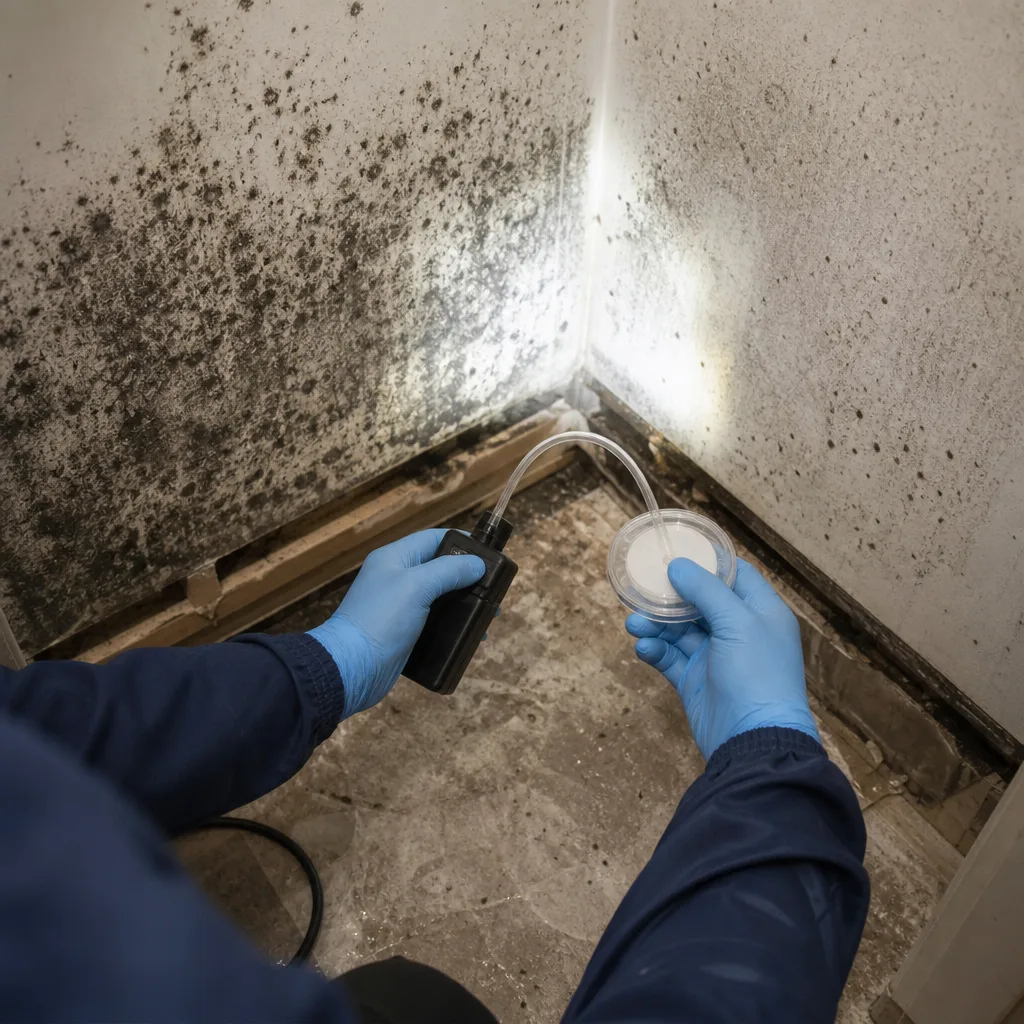
Burst pipes in Huntington Beach follow patterns tied to the city’s housing stock and soil conditions. Older copper lines in 1960s slab homes develop pinhole failures from internal corrosion and external soil chemistry. The field vignette we see repeatedly: a pinhole slab leak wicks undetected under laminate or tile until baseboards swell or flooring buckles. On a 1962 wood-frame stucco slab home off Adams Avenue near Huntington Harbour, our techs found exactly this scenario - and because the address fell inside a methane-designated zone, we pulled soil-gas testing and a barrier upgrade into the scope of work before we ever trenched the slab. We moisture-mapped the whole footprint, ran a full pack-out of the affected room, and set Dri-Eaz air movers over a Phoenix dehumidifier for five days of documented structural drying, upgrading the vapor barrier past minimum code so the marine-layer humidity wouldn’t put mold back into the rebuilt wall cavity.
Basement Water Removal
True basements are rare in Huntington Beach’s slab-dominant housing stock, but partial daylight basements and below-grade additions in newer construction near the Bolsa Chica wetlands do exist. These spaces face hydrostatic pressure from high water tables and poor perimeter drainage compounded by salt-air corrosion of sump pump systems. We remove water, assess pump and drainage failure points, and document whether the loss stems from a covered peril or maintenance issue - documentation that matters when your adjuster reviews the claim.
Ceiling & Roof Leak Water Damage
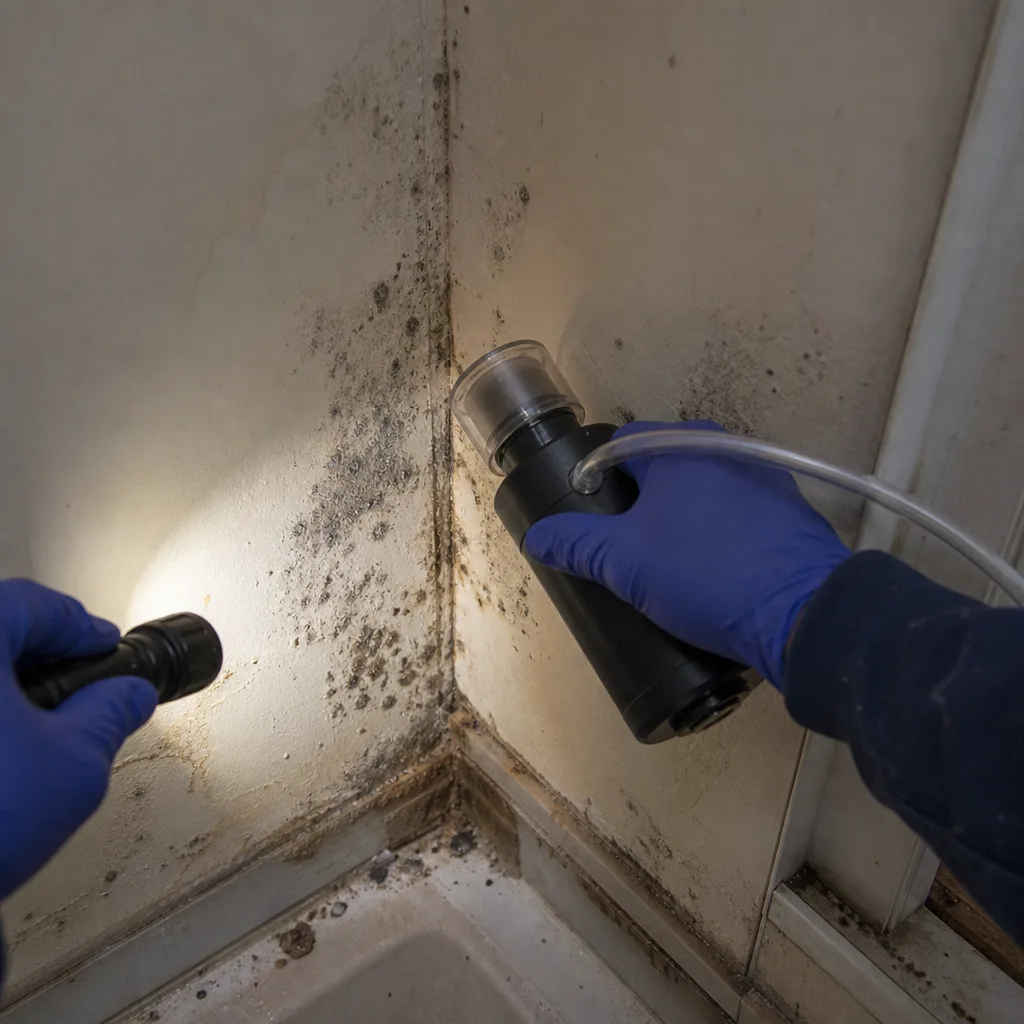
Flat-roof condo complexes along Pacific Coast Highway and aging composition shingle roofs in Central Park see chronic leak patterns during Huntington Beach’s brief but intense winter rain events. Ceiling water damage requires careful scope definition: is the drywall salvageable with targeted drying, or has the leak saturated insulation above? We use borescope cameras and moisture mapping to answer before cutting. Every penetration is photo-documented, and the drying plan addresses both the visible ceiling damage and the roof deck or membrane failure that caused it.
What happens when you call
- 1
A real person answersNo phone trees - you reach a local pro.
- 2
You get an upfront price rangeHonest numbers before anyone is dispatched.
- 3
A background-checked tech heads outLicensed & insured, dispatched right away.
- 4
You approve before work beginsNothing starts until you say go.
 Before
 After
AfterTrusted Brands We Service in Huntington Beach
Our equipment inventory centers on professional-grade drying systems from Dri-Eaz, Phoenix, and XPOWER - brands that produce the documented airflow and dehumidification capacity required for IICRC-compliant structural drying. We don’t rent equipment by the job. We own it, maintain it, and log its performance on every Huntington Beach mitigation. That ownership means no delay waiting for third-party delivery when a marine-layer humidity spike is already compressing your mold timeline. For injection-drying applications in wall cavities and hardwood flooring, we deploy Injectidry systems that force dry air into confined spaces without destructive demolition. B-Air units handle specialized contents drying when pack-outs are required. Every piece of equipment is documented to IICRC, RIA, and IFA standards, and the daily logs become part of your claim file.
Common Water Damage Restoration Problems We See in Huntington Beach Homes
- Salt-air moisture wicking behind aging stucco. The 1950s-1970s tract homes that define Huntington Beach’s interior neighborhoods were built with stucco systems that have developed micro-fractures from decades of thermal expansion and salt crystallization. Moisture penetrates these fractures, saturates the paper-backed lath, and migrates into wall cavities - often mimicking a plumbing leak in its symptoms while requiring entirely different remediation.
- Marine-layer humidity compressing the mold colonization window. The persistent Pacific humidity that blankets Huntington Beach from May through September keeps interior relative humidity elevated well above inland OC norms. Category 1 water on drywall and framing can slide toward mold colonization in 24-36 hours. Crews who schedule drying a day late routinely come back to containment-and-antimicrobial jobs instead of simple extraction.
- Undetected under-slab water migration. Slab foundations offer no visual access to plumbing leaks until secondary damage appears: buckling laminate, stained baseboards, or efflorescence on concrete. Moisture mapping is essential to pin down the true scope. Without it, half the loss goes unaddressed.
- Methane-zone ordinance delays on slab and foundation work. In methane-designated zones - mapped across large portions of Huntington Beach due to its oil-field history - starting slab or sub-slab work before the city’s ordinance is satisfied stalls mitigation mid-dry and stretches timelines for homeowners already displaced. Soil-gas testing and barrier upgrades add cost and calendar days, but skipping them triggers permit holds and rework.
Pricing for Water Damage Restoration in Huntington Beach, CA
We publish ranges because Haven Standard, Clause 1 requires a written price before work starts - and you can’t write a price you haven’t discussed. In Huntington Beach’s market, emergency water extraction typically runs $1,200-$2,400 for a standard residential loss up to 1,500 square feet. Structural drying and dehumidification adds $1,600-$4,100 depending on affected square footage, material classification, and the equipment days required to hit dry standard. Category 3 sewage losses or methane-zone jobs requiring soil-gas testing and barrier upgrades range $4,500-$8,200. Containment and antimicrobial treatment, when marine-layer humidity has already advanced colonization, adds $800-$2,400.
What moves the number: affected square footage, contamination category, whether flooring and drywall require removal, and whether the property falls in a methane-designated zone with attendant testing and barrier costs. Every scope is written item-by-item, agreed in writing before work begins, with no additions once the crew is inside your home. Free estimates. Free second opinion on any competitor’s written quote. Call (424) 373-5092.
We Also Serve Cities Near Huntington Beach
Our Water Damage Restoration in Huntington Beach crews regularly cross into Seal Beach for coastal condo losses, Garden Grove for inland slab-home pinhole leaks, Cypress for aging tract-home stucco failures, and Long Beach for larger commercial and residential flood events. The same documentation standards, the same written-price guarantee, the same live-answered emergency line. If you’re in a neighboring city and reading this page, the protocols apply to your job too.
Serving Huntington Beach, CA - Our Local Coverage Area
We’re based in the Huntington Beach area and know this community well. Use the map below to see our service coverage - if you’re nearby, we can almost certainly help.
FAQs - Water Damage Restoration in Huntington Beach
In Huntington Beach, mold colonization can reach actionable levels within 24-36 hours of a water intrusion event, compared to 48-72 hours in drier inland climates. The marine layer that blankets the city from May through September keeps interior relative humidity elevated, creating conditions where Category 1 water on drywall and framing advances to active colonization faster than standard industry timelines assume. Our structural drying protocols account for this compression with higher-capacity dehumidification and more frequent moisture monitoring. Call (424) 373-5092 for an exact quote - estimates are free.
Because large portions of Huntington Beach sit inside mapped methane-designated zones due to the city’s oil-field legacy, and the city’s methane mitigation ordinance requires soil-gas testing and barrier upgrades before any slab penetration or sub-slab access. This regulatory layer does not exist in neighboring Seal Beach or Fountain Valley. Starting work without satisfying the ordinance triggers permit holds, mid-project stalls, and rework that stretches timelines for displaced homeowners. We pull methane compliance into the initial scope and price it in writing before work begins. Call (424) 373-5092 for an exact quote - estimates are free.
Yes, in three specific ways: salt-air corrosion degrades plumbing and HVAC components faster than inland, the marine layer elevates interior humidity that accelerates mold colonization, and coastal wind-driven rain penetrates aging stucco and flat-roof assemblies more aggressively. The combination means coastal Huntington Beach properties often present secondary damage that’s more extensive than the initial intrusion suggested. Our moisture mapping and documentation protocols are designed to catch that hidden scope before reconstruction begins. Call (424) 373-5092 for an exact quote - estimates are free.
Category 1 water originates from a clean source - burst supply lines, rainwater, melting ice - and is considered safe for initial contact, though it degrades to Category 2 within 24-48 hours if left standing. Category 2 water contains significant chemical, biological, or physical contamination - dishwasher discharge, washing machine overflow, sump pump failures - and requires antimicrobial treatment plus removal of porous materials that can’t be sanitized. Category 3 water is grossly contaminated with pathogens or toxic substances - sewage backup, seawater flooding, rising ground water - and mandates full removal of affected porous materials, specialized PPE, and documented disposal. The category determination drives every downstream decision in your scope: what stays, what goes, what it costs, and what your policy covers. Call (424) 373-5092 for an exact quote - estimates are free.
We don’t guess. We measure. A Huntington Beach home is dry enough to rebuild when moisture content in wood framing reads below 16% and drywall below 1%, verified with calibrated pin-type and pinless moisture meters, documented in the daily drying log, and confirmed by thermal imaging showing no anomalous temperature patterns that indicate residual moisture. In Huntington Beach’s marine-layer environment, we also verify that the vapor barrier upgrade exceeds minimum code so humidity won’t reintroduce mold into the rebuilt cavity. Rebuilding before these numbers are met is how contractors create callback jobs. We don’t. Call (424) 373-5092 for an exact quote - estimates are free.
Written by Alicia Brennan, Owner at DryMark Restoration Long Beach, serving Huntington Beach since 2011.