
Last updated September 23, 2026
Free visual inspection and a written scope of work before any mitigation begins - photos, moisture readings, and drying logs go in your claim file
The scope we write is the scope we bill. Anything new gets shown to you, in writing, before we touch it.
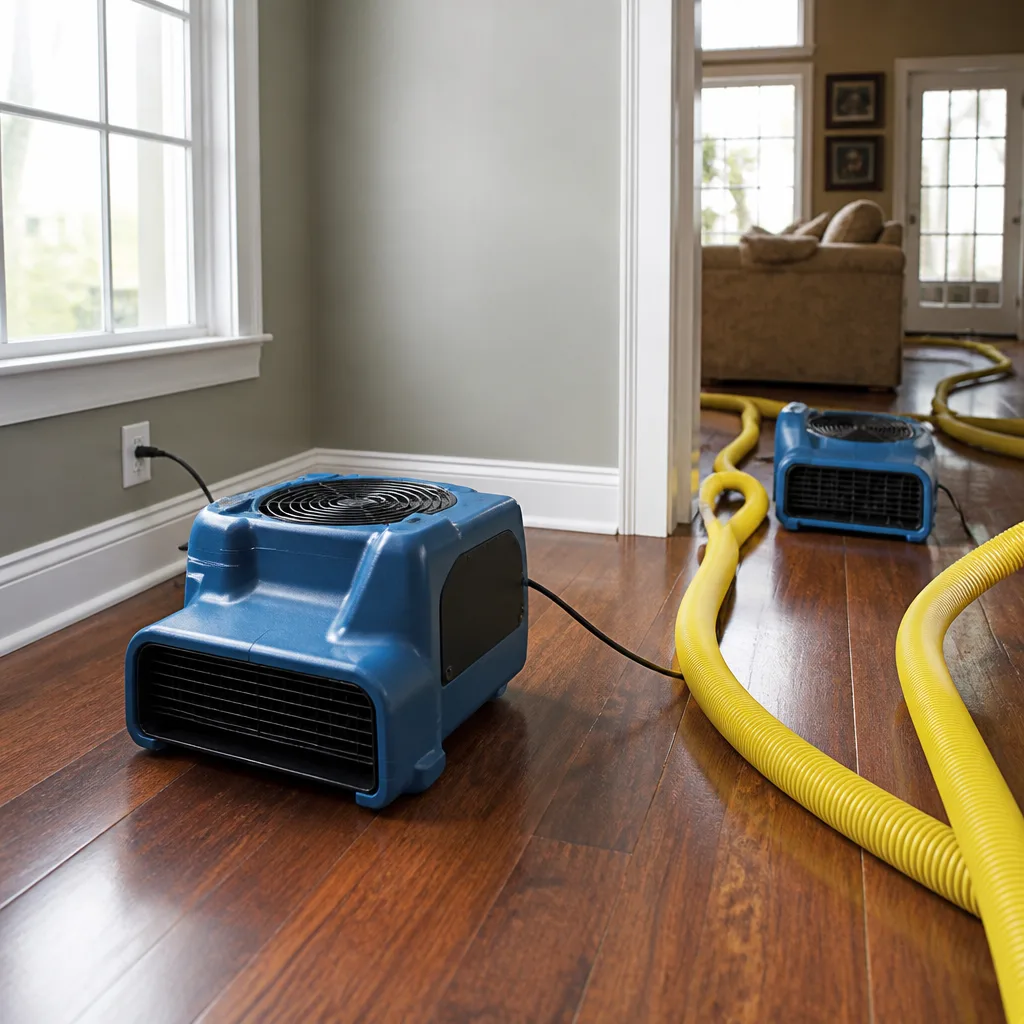
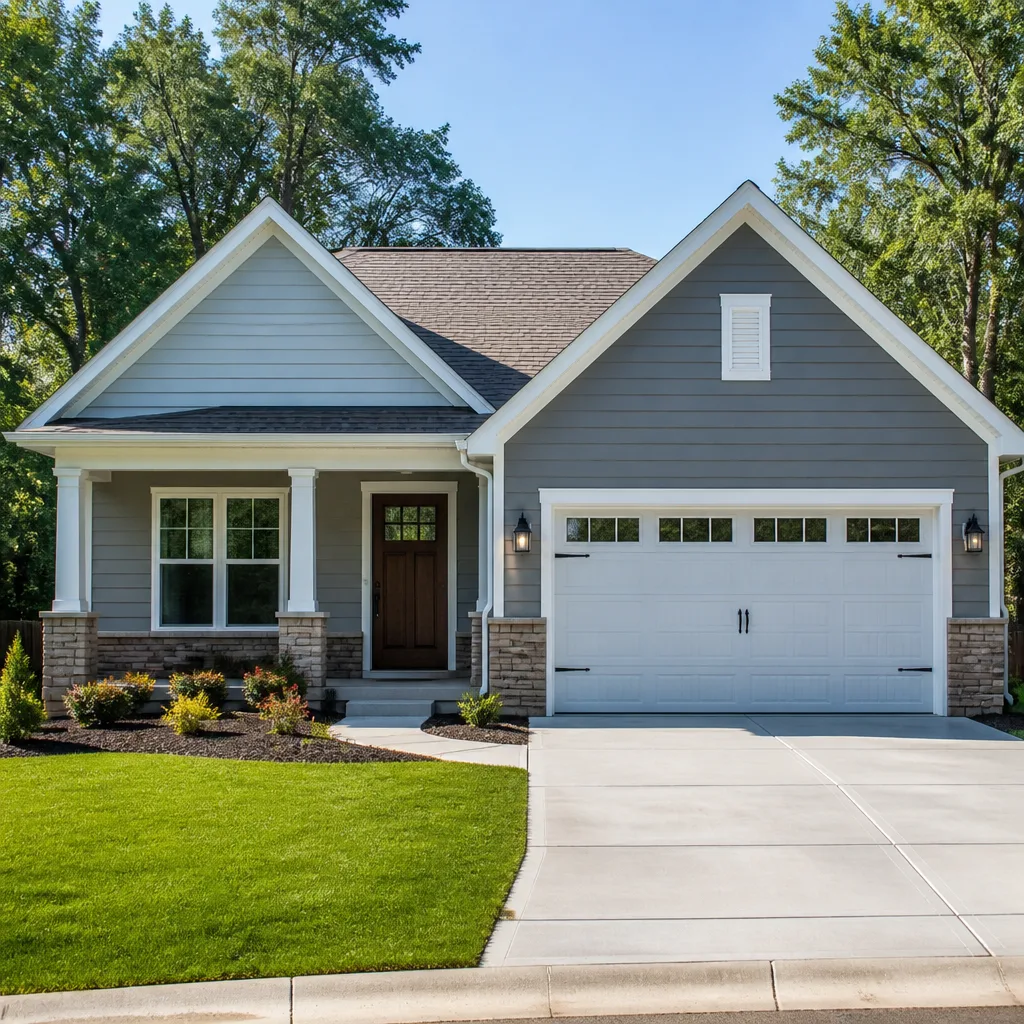
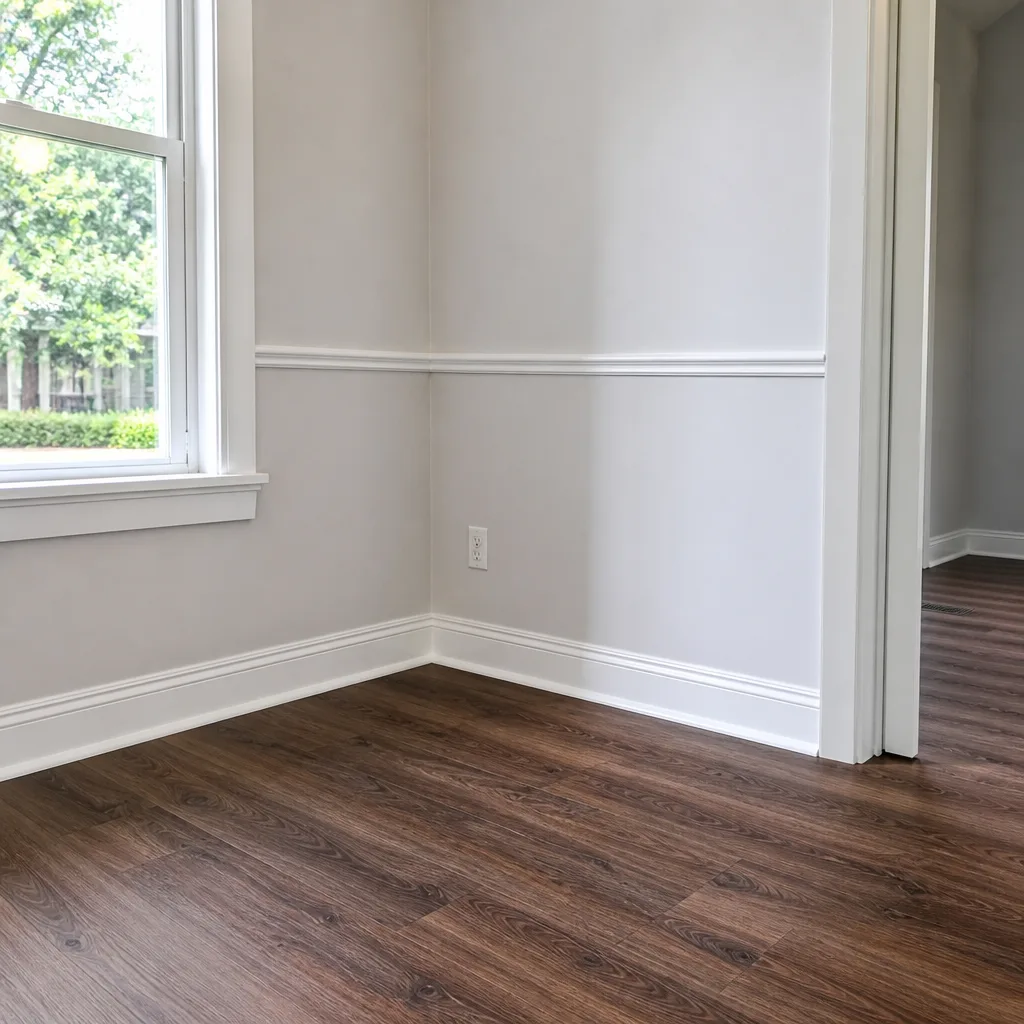
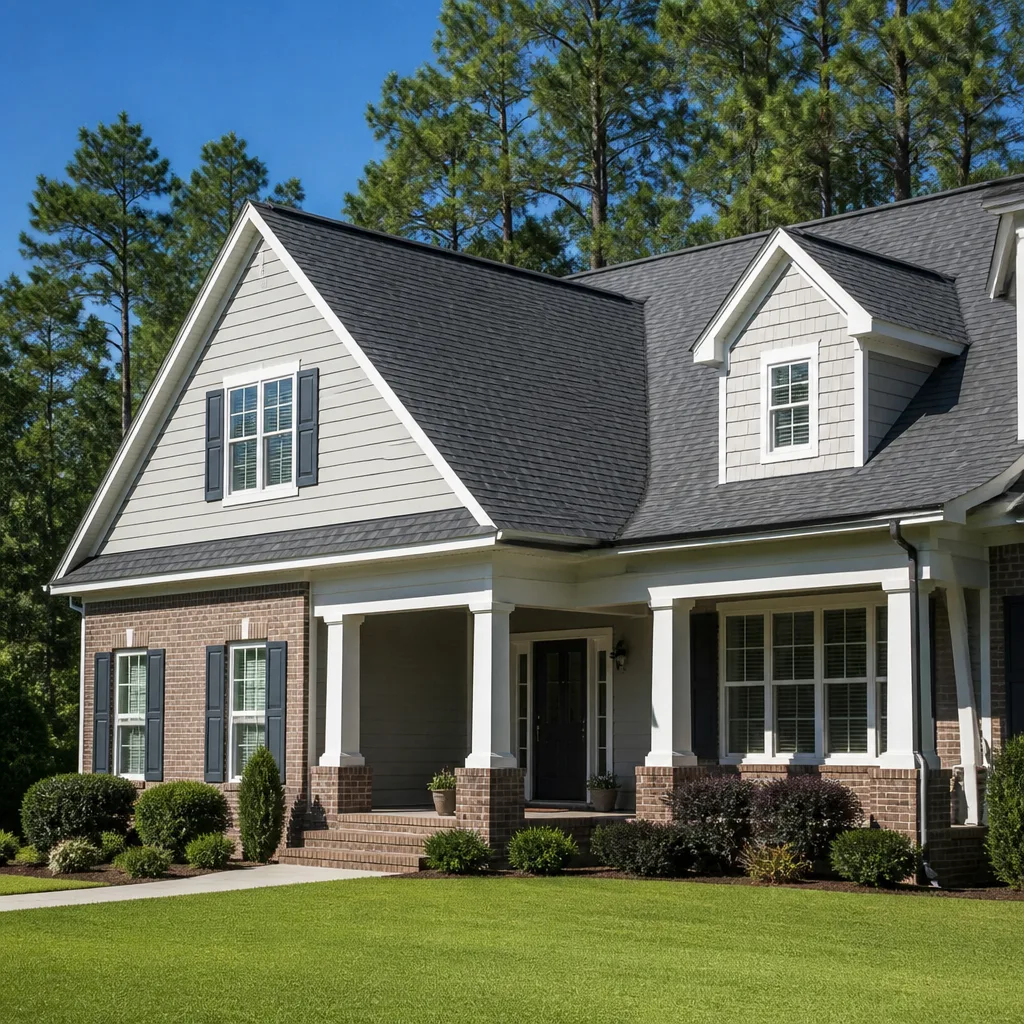
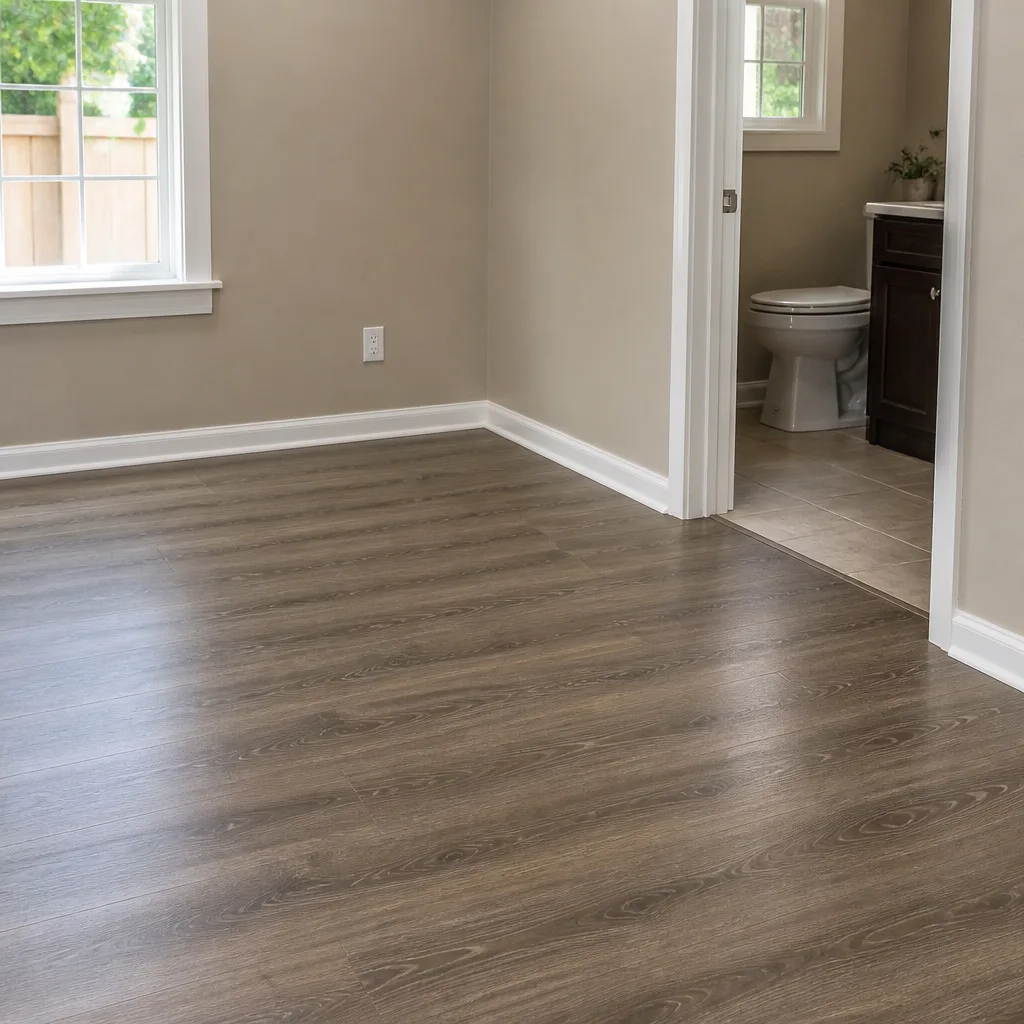
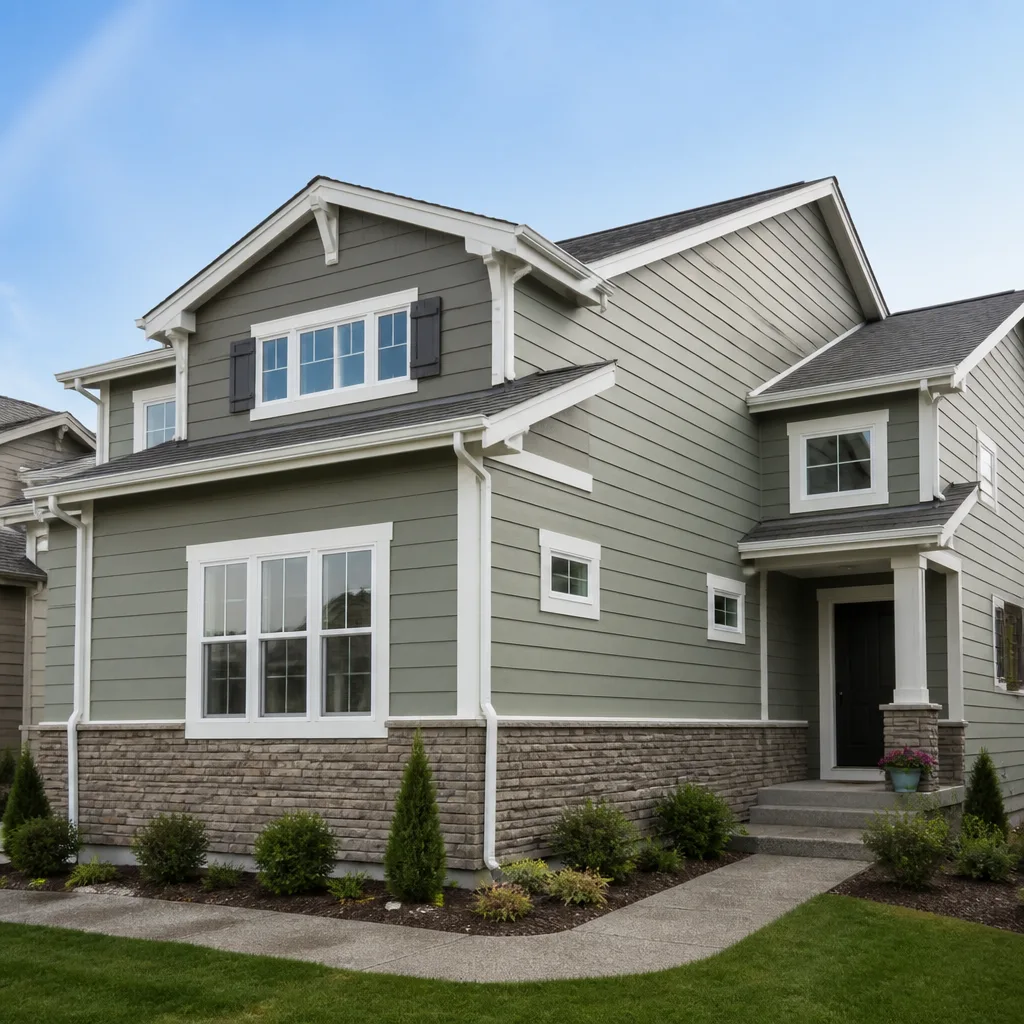
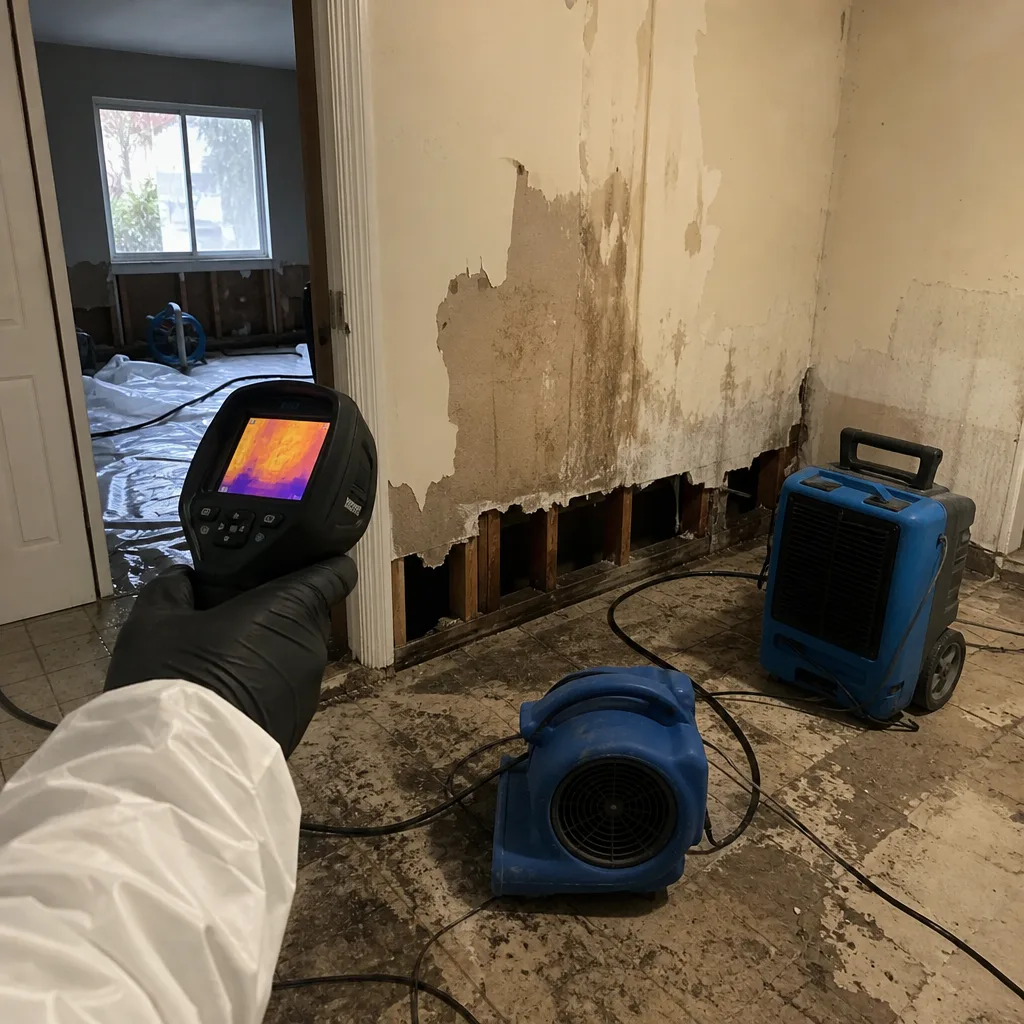 Before
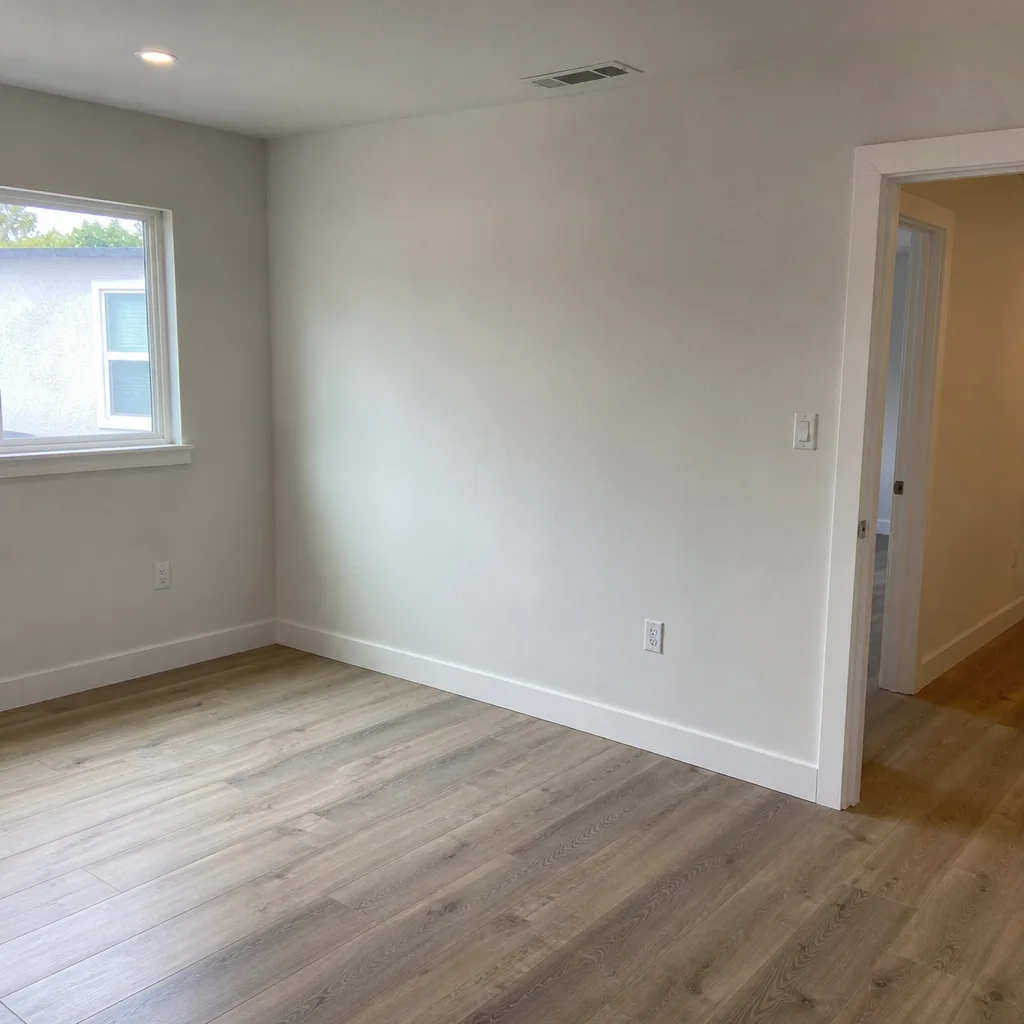 After
After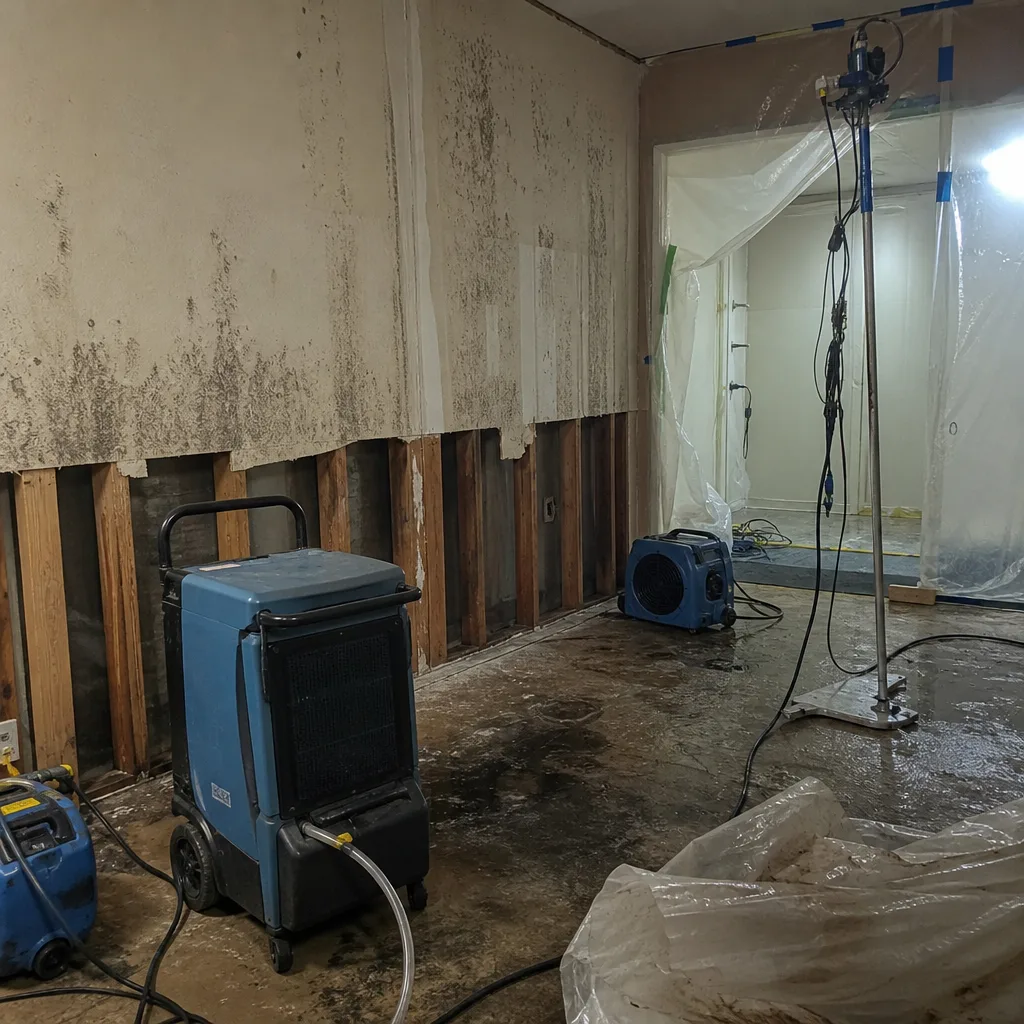 Before
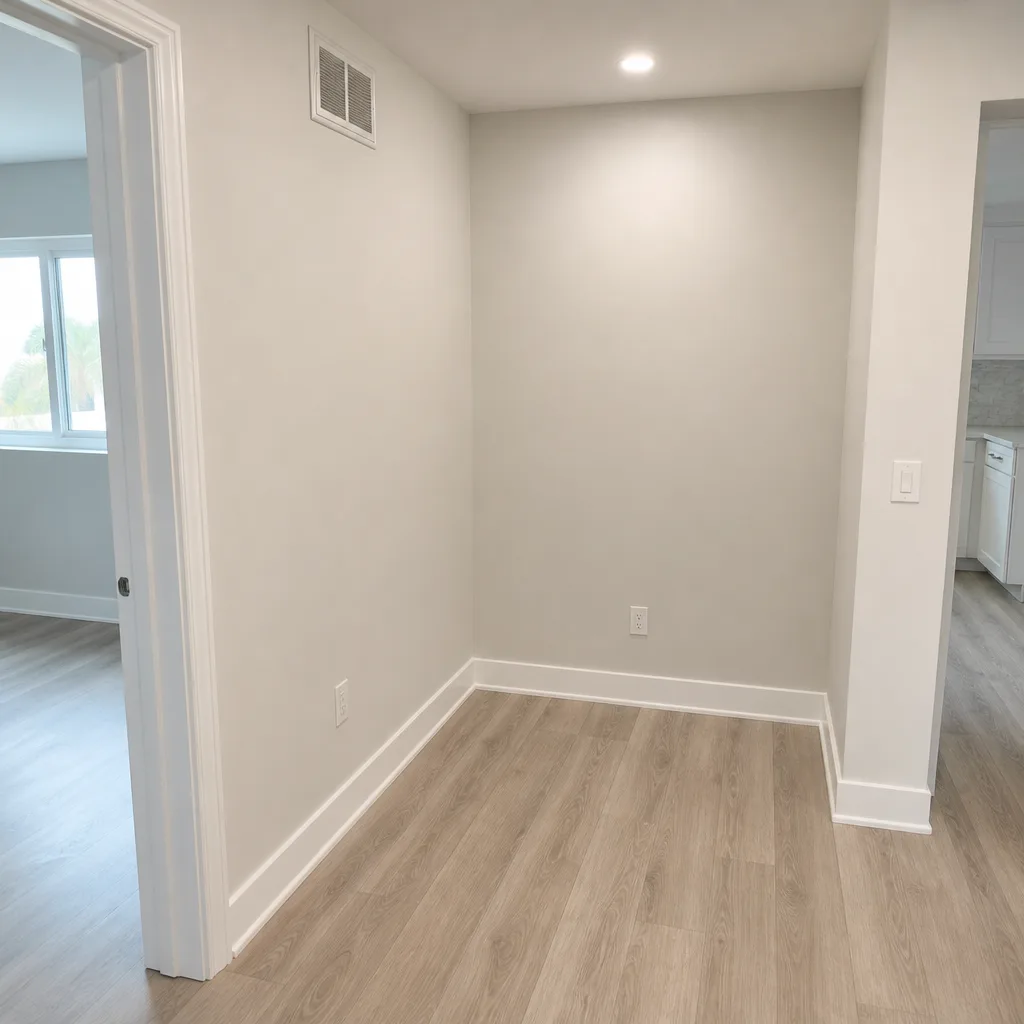 After
After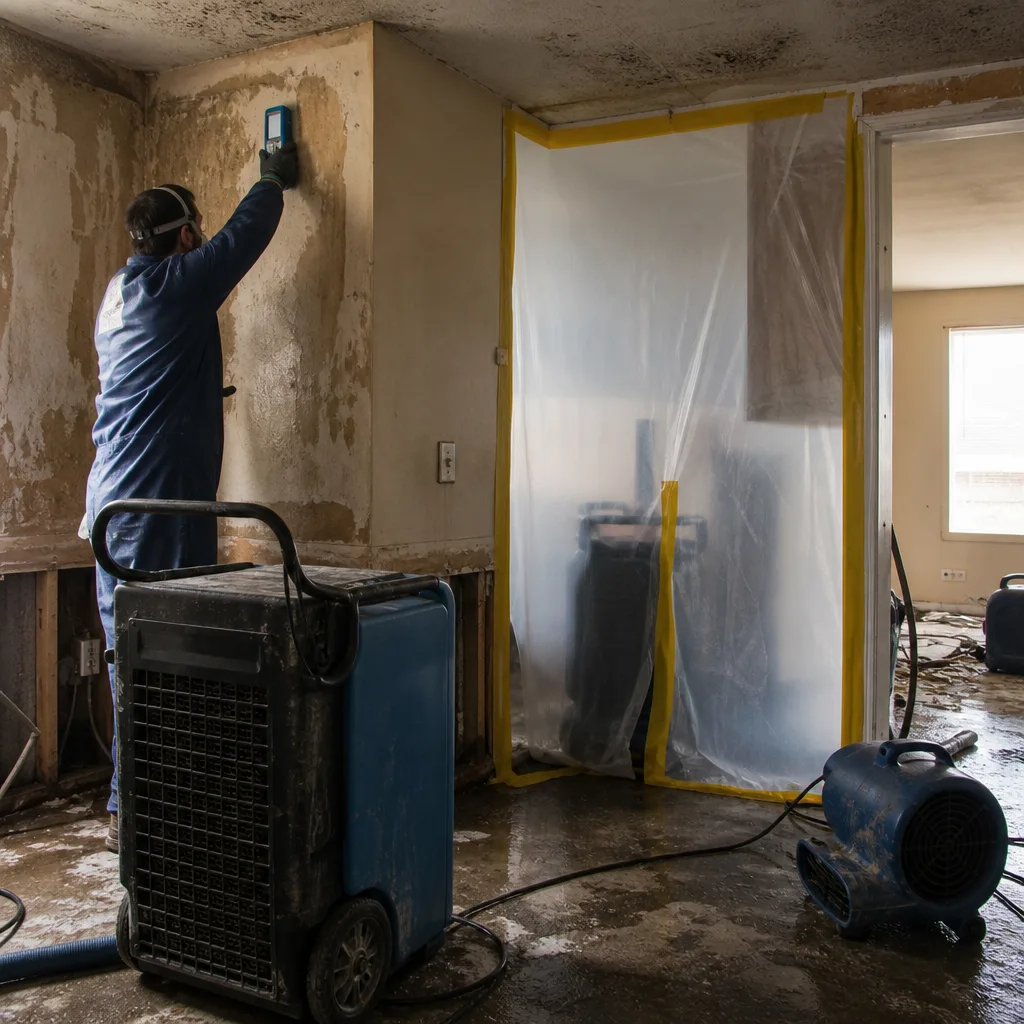 Before
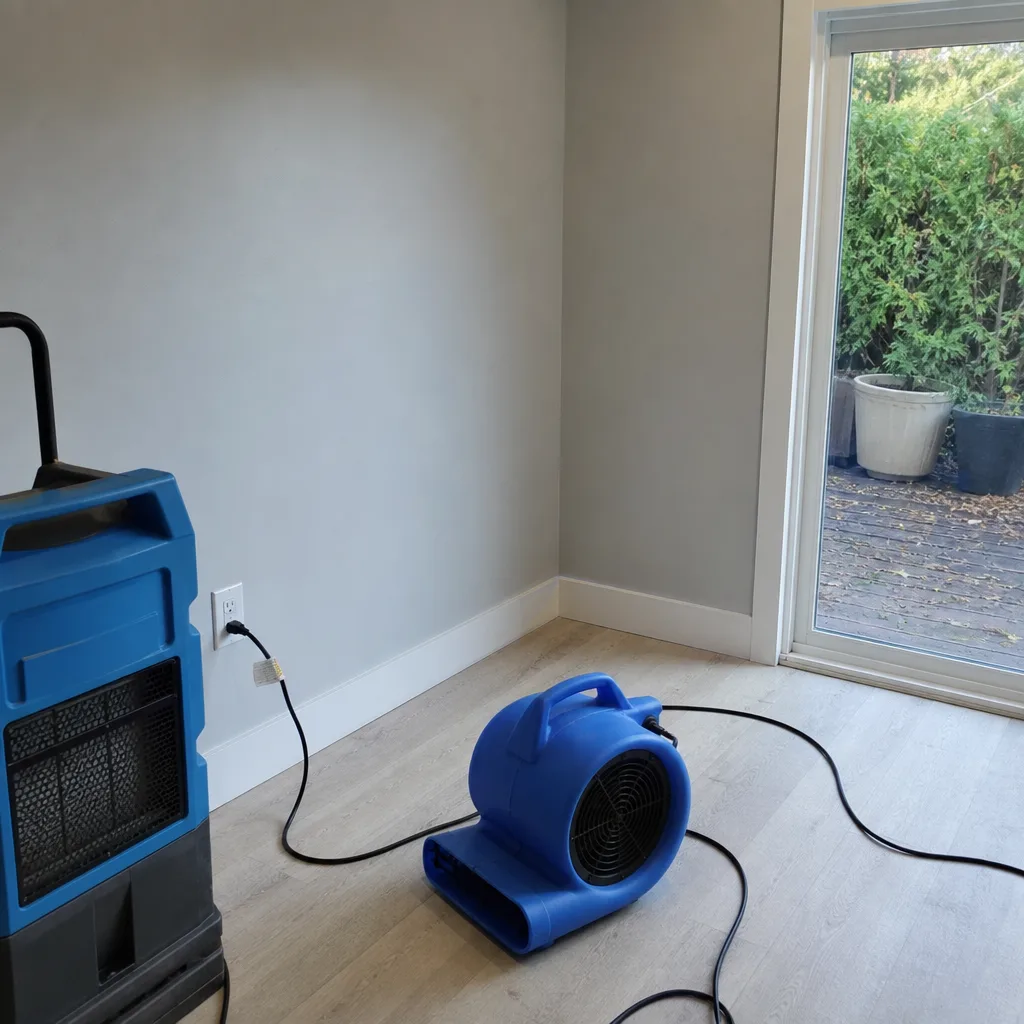 After
AfterThe Complete Guide to Damage Restoration in Long Beach
A Long Beach homeowner hired a contractor to dry their flooded Belmont Heights basement after a failed water heater. The crew ran fans for three days, collected payment, and left. Six months later, at insurance settlement, the carrier reduced the structural drying claim by 40%. The work was done. The house was dry. But no one had produced daily psychrometric logs, no moisture map existed, and the initial readings were guesswork. The insurer paid for demolition and rebuild, not for drying that could not be proven. This guide shows you how to manage restoration as a documented process, not a hope, so your claim closes at full value.
Quick Answer
Damage restoration in Long Beach is a multi-phase process of mitigation, documentation, and reconstruction governed by IICRC standards, local building codes, and insurer requirements. A properly documented restoration includes an initial moisture map, daily drying logs with psychrometric data, and clearance readings that convert contractor invoices into payable claims. In Long Beach’s coastal climate, where relative humidity regularly reaches 70-85%, drying timelines often extend beyond standard 3-day benchmarks, making documentation even more critical to claim acceptance.
Table of Contents
- How Long Beach’s Coastal Climate Affects Restoration Timelines
- The Documentation Chain That Gets Claims Paid
- What IICRC S500 and S520 Require at Each Phase
- Long Beach Permits and Building Codes for Restoration Work
- How to Read a Restoration Scope of Work
- Water Damage Restoration: Process and Standards
- Mold, Fire, and Specialty Restoration
- Common Mistakes to Avoid
- When to Call a Professional
- Frequently Asked Questions
 Before
 After
AfterHow Long Beach’s Coastal Climate Affects Restoration Timelines
Long Beach sits on a coastal plain with marine layer influence that keeps relative humidity elevated well into afternoon hours, particularly in neighborhoods like Belmont Shore, Naples, and the Peninsula where onshore flow is unobstructed. Standard IICRC drying benchmarks assume indoor conditions of 30-50% relative humidity and temperatures between 70-80 degrees Fahrenheit. In Long Beach, we regularly encounter structures where ambient humidity never drops below 65% without aggressive mechanical dehumidification.
This matters because moisture evaporation from wet materials depends on vapor pressure differential, the gap between the moisture in the material and the moisture in the surrounding air. When coastal humidity narrows that gap, evaporation slows. A carpet and pad extraction that might reach dry standard in 48 hours inland can require 72-96 hours in a Long Beach home with inadequate dehumidification capacity.
We see this pattern consistently in water damage restoration in Long Beach projects, particularly in older homes near Alamitos Bay where construction dates to the 1920s-1940s and building envelopes are not vapor-tight. The marine layer rolls in overnight, reintroduces moisture through open windows or porous stucco, and extends drying curves by a full day or more.
What this means practically: any restoration scope in Long Beach that assumes a 3-day dry without specifying dehumidifier capacity in pints per day, air changes per hour, and targeted equilibrium moisture content is not accounting for local conditions. The contractor may hit their timeline and leave, but the materials may not have reached dry standard, setting up secondary damage or mold growth that appears weeks later.
Our crews deploy LGR (low grain refrigerant) dehumidifiers from Dri-Eaz and Phoenix rated for coastal conditions, with documented capacity calculations based on the specific cubic footage and Class of water loss per IICRC S500. We do not guess at equipment counts. We calculate them, log the readings, and adjust daily.
The Documentation Chain That Gets Claims Paid
The single largest gap we encounter in disputed claims is not incomplete work. It is incomplete paperwork. Insurers do not pay for effort. They pay for documented outcomes. The documentation chain that converts a contractor’s invoice into insurer-accepted proof has four links, and missing any one creates the opening for a reduced or denied payment.
Link 1: The Initial Moisture Map
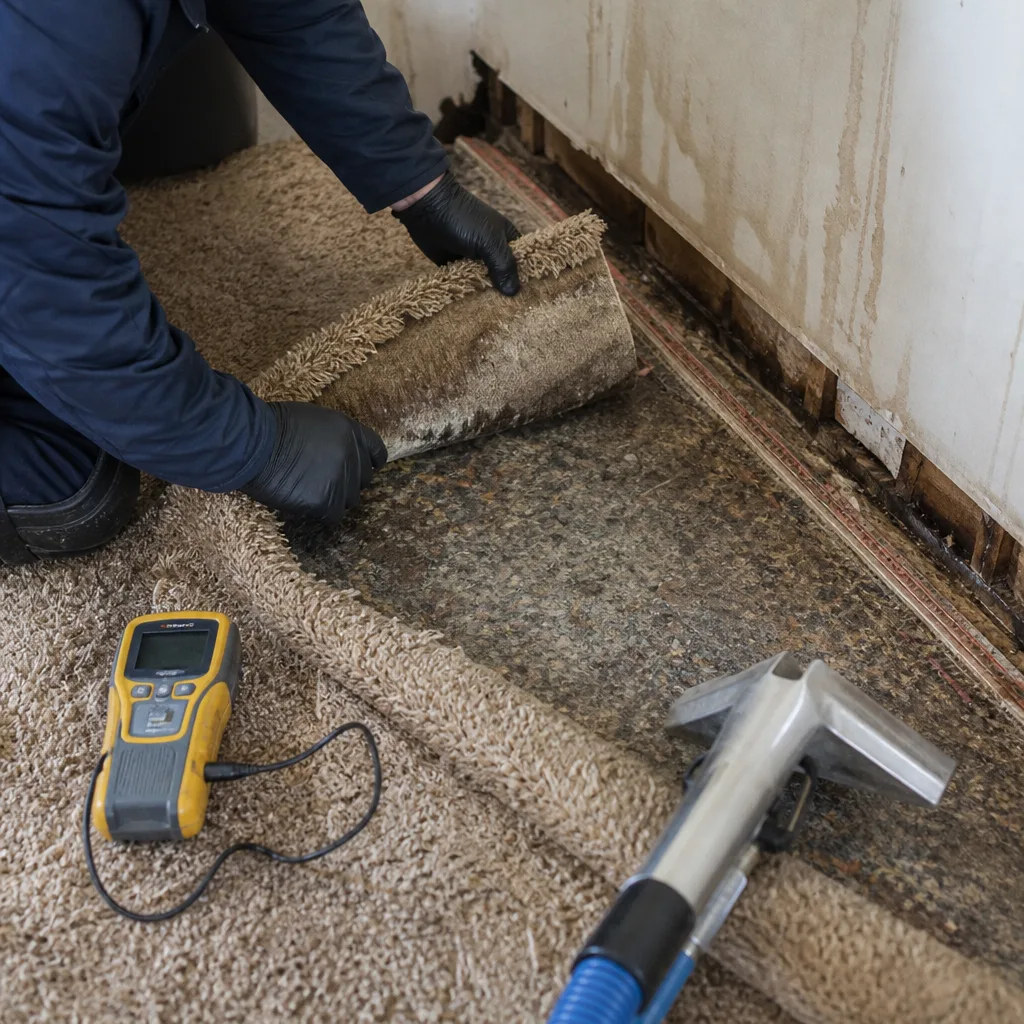
Before any equipment runs, a qualified technician maps affected areas with pin and pinless moisture meters, thermal imaging, and in some cases thermo-hygrometers to identify hidden moisture pockets. This map establishes the baseline: which materials are wet, how wet, and where the moisture boundary sits. Without it, there is no proof the drying equipment was placed where needed, or that the areas later claimed as dry were ever wet to begin with.
At DryMark Restoration Long Beach, this map is photographed, annotated with meter readings and material types, and delivered to the homeowner before equipment startup. It becomes the first page of the job file.
Link 2: Daily Psychrometric Logs
Psychrometrics is the study of air and moisture relationships. A psychrometric log records temperature, relative humidity, and specific humidity at multiple points in the affected space, plus the readings from unaffected areas used as drying goals. These logs prove the drying environment was controlled, that progress occurred, and that equipment was sufficient for the load.
We log these readings every 24 hours minimum, more frequently on Category 3 losses or when outdoor conditions spike. The log includes equipment serial numbers, positions, and any adjustments made. When an adjuster reviews the file, they see a controlled process, not a black box.
Link 3: The Written Scope of Work
Haven Standard, Clause 1: a written price before any work starts. Every time, with no exceptions. This scope itemizes each task, material, and equipment charge with quantities and unit prices. It is signed by the homeowner before work begins. No scope-creep additions once the crew is inside.
The scope also specifies the standard being followed (IICRC S500 for water, S520 for mold, S700 for fire), the anticipated duration, and the documentation deliverables. This is not a courtesy. It is the contract that prevents dispute.
Link 4: Clearance Readings and Final Documentation
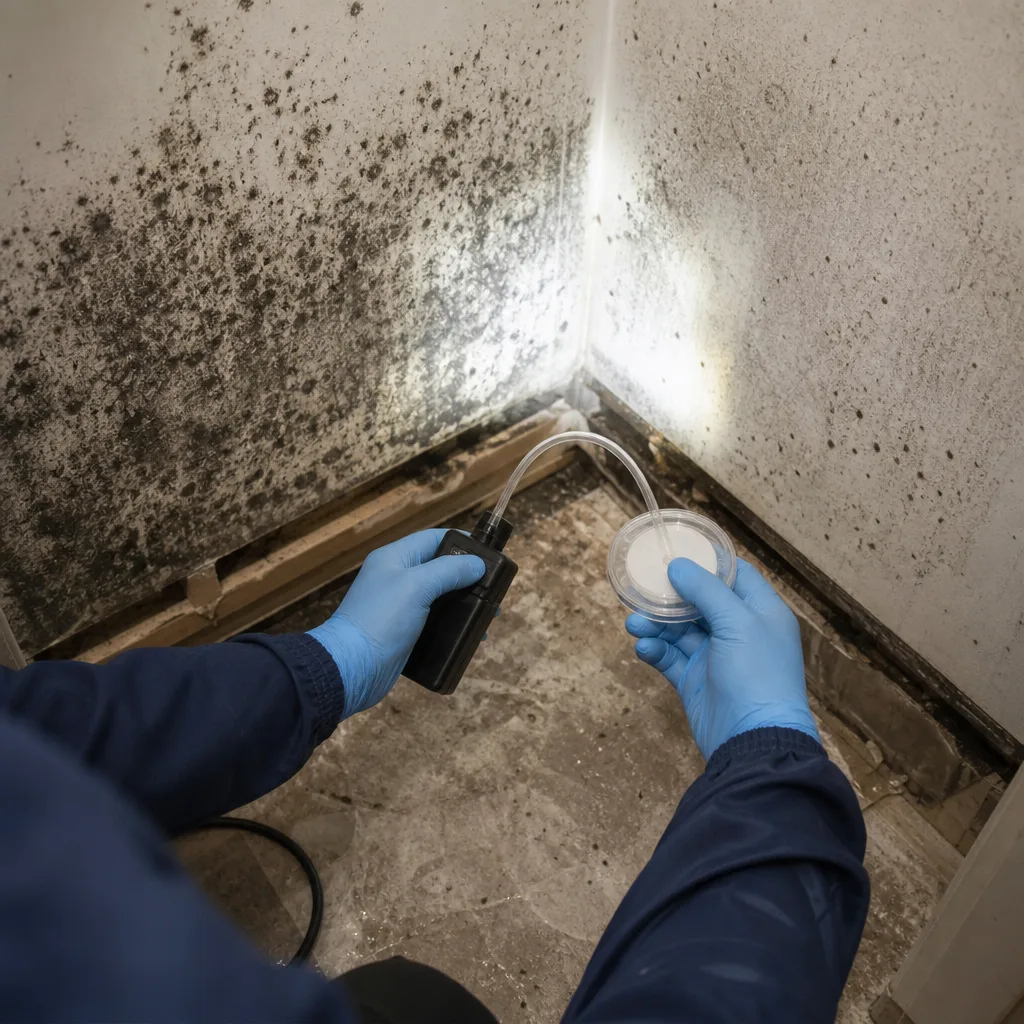
Drying is complete when materials reach their established dry standard, documented with meter readings at the same locations as the initial moisture map. We photograph these readings, compile the complete photo record, and deliver it with the final invoice. For mold remediation, clearance includes air and surface sampling per S520, with laboratory results.
This four-link chain, maintained on every job since 2011, is why our invoices process cleanly. Adjusters recognize the format. They know what they are looking at. The claim closes faster.
What IICRC S500 and S520 Require at Each Phase
IICRC standards are not suggestions. They are the reference framework insurers use to evaluate whether restoration work was performed to accepted industry practice. Understanding what these standards require at each phase lets you verify your contractor is following them, or identify gaps that will surface at claim time.
IICRC S500: Water Damage Restoration
S500 organizes water damage into Categories (1, 2, 3) based on contamination level, and Classes (1-4) based on evaporation load and materials affected. Each combination dictates specific procedures, equipment requirements, and drying timelines.
Category 1 (clean water): Extract, apply antimicrobial if needed, dry to standard. Category 2 (gray water): Requires cleaning of affected materials, potential removal of porous items, enhanced antimicrobial application. Category 3 (black water, including sewage): Requires removal of porous materials, thorough cleaning and disinfection of remaining structure, and often post-drying verification sampling.
Class determination drives equipment calculations. A Class 1 loss (minimal wet porous materials) might need one dehumidifier per 1,000 square feet. A Class 4 loss (low-permeance materials like plaster, hardwood, concrete) requires specialized drying systems, including Injectidry mat systems or directed heat, with extended timelines.
S500 requires documentation at each phase: initial assessment with moisture readings, daily monitoring with psychrometric data, and final verification with dry standard confirmation. A contractor who cannot produce these records is not following S500, regardless of what they claim.
IICRC S520: Mold Remediation
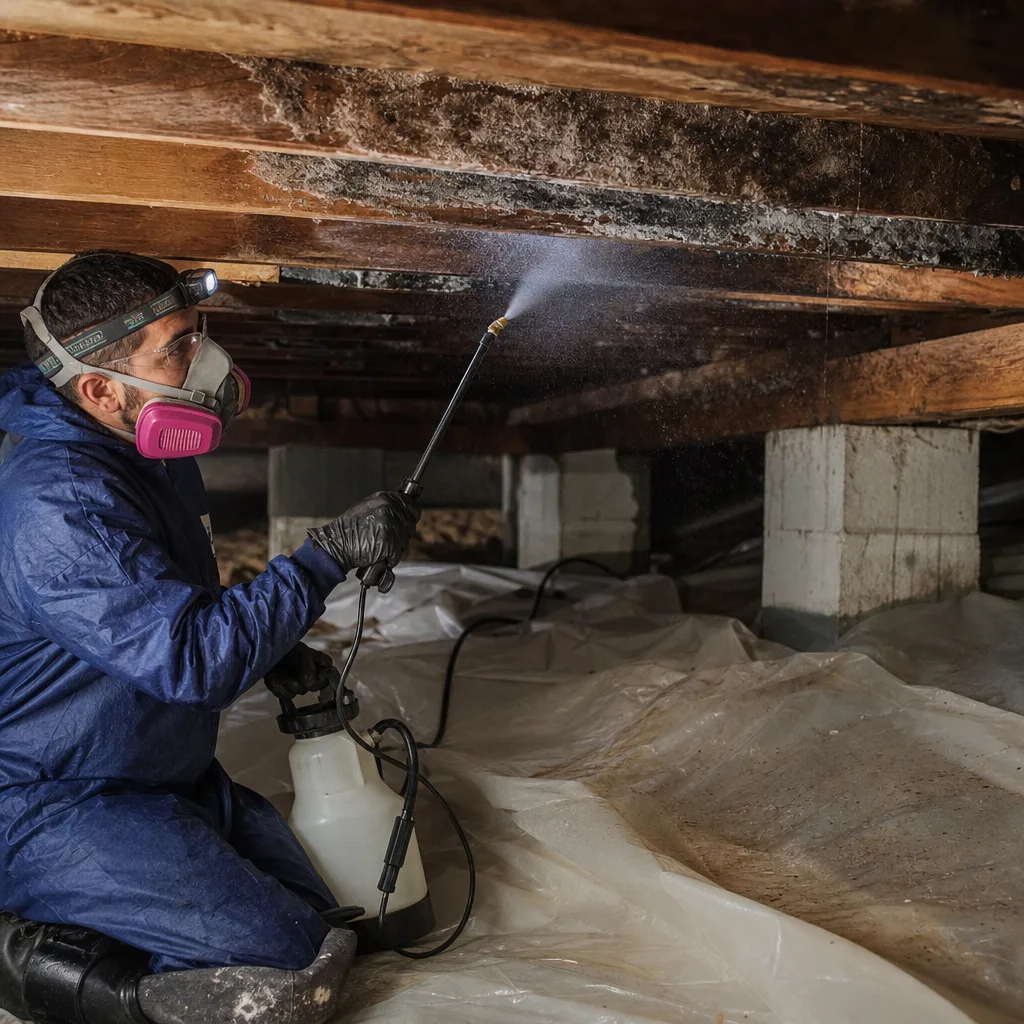
S520 establishes containment, engineering controls, and clearance criteria for mold projects. Key requirements include:
- Containment barriers separating work areas from clean spaces, with negative air pressure maintained by HEPA-filtered air scrubbers
- Personal protective equipment appropriate to the contamination level and work activity
- Removal of mold-damaged materials following specific cutting and bagging protocols
- HEPA vacuuming and damp-wiping of all surfaces within containment
- Post-remediation verification, typically including visual inspection and air sampling
In Long Beach, we encounter significant mold activity in properties near the Los Angeles River floodplain and in older California bungalows with unvented crawl spaces where coastal humidity accumulates. Mold remediation in Long Beach frequently requires enhanced containment due to the prevalence of lath-and-plaster construction, which can harbor hidden mold behind intact plaster surfaces.
S520 is explicit: visible mold must be removed. Encapsulation or painting over active growth is not remediation. Any scope that proposes “sealing” mold without removal is not following the standard and will not pass insurer review.
Long Beach Permits and Building Codes for Restoration Work
Restoration work that crosses into structural repair, electrical, plumbing, or HVAC modification triggers Long Beach building permit requirements. Proceeding without required permits does not just risk code enforcement. It creates claim complications when insurers discover unpermitted work, which they may exclude from coverage or require to be redone.
When Permits Are Required
Structural drying itself, the extraction and dehumidification phase, typically does not require a permit. But the repair phase that follows often does. In Long Beach, permits are required for:
- Drywall replacement exceeding 200 square feet in a single room, or any amount if the wall is fire-rated or structural
- Electrical outlet or switch replacement in water-damaged areas, which requires an electrical permit
- Plumbing repairs beyond fixture replacement, including pipe repairs behind walls
- HVAC ductwork replacement or cleaning in mold-impacted systems
- Any work in a designated flood zone that affects the building envelope
The Long Beach Development Services Department issues these permits, and inspections are required at rough and final stages for most trades. A restoration contractor who completes drywall replacement without permit and inspection leaves the homeowner with an unpermitted repair that must be disclosed on sale and may be rejected by the insurer if the damage recurs.
The Claim Impact
We have reviewed competitor estimates where $15,000 in drywall, electrical, and plumbing replacement was scoped with no permit line item. The homeowner paid, the work was done, and six months later the insurer denied a related claim because the prior repair lacked permit documentation. The homeowner was left arguing with both the contractor and the carrier.
Haven Standard requires that our scopes identify permit requirements explicitly, with permit costs itemized and the permitting authority named. We coordinate inspections as part of project management. The permit record becomes part of the documentation package, protecting the claim and the property value.
In Long Beach specifically, properties in the Coastal Zone or Historic Districts may face additional review requirements for exterior repairs or window replacement after storm damage. The Planning Bureau review adds 2-4 weeks to permit issuance. A restoration timeline that does not account for this delay will miss completion targets and potentially affect temporary living expense coverage.
How to Read a Restoration Scope of Work
The scope of work is the contract that defines what you are buying, what the insurer is being asked to pay, and what documentation will prove completion. Learning to read it protects you from three common problems: padded line items that inflate cost, missing items that leave work undone, and unbundled pricing that obscures true unit costs.
Identifying Padded Line Items
Padded items appear as excessive quantities, duplicate charges, or unit prices above market rate. Compare the square footage of affected areas to the quantities listed. If a 12×15 living room (180 square feet) shows 240 square feet of carpet removal, question the measurement. If air mover rental appears at $85 per day per unit when local rental rates are $35-45, the unit price is inflated.
We provide our unit prices with reference to industry pricing databases used by adjusters. This transparency lets homeowners and adjusters verify reasonableness. Haven Standard, Clause 1 requires this specificity.
Spotting Missing Items
Missing items are harder to catch because they require knowing what the standard requires. Key items often omitted from competitor scopes:
- Content manipulation and protection (moving and covering furniture, not just working around it)
- Antimicrobial application on Category 2 and 3 losses
- Post-drying verification readings
- HVAC inspection and cleaning when ductwork was exposed to contamination
- Permit costs and inspection fees
- Debris disposal fees, which in Long Beach run $45-65 per cubic yard at approved facilities
A scope that omits these items presents a lower initial price but generates change orders later, or leaves critical work undone. We itemize each required element upfront. The price you sign is the price you pay.
Recognizing Unbundled Pricing
Unbundled pricing combines multiple distinct tasks into a single lump sum with no breakdown. “Mitigation services: $8,500” tells you nothing about what is included, what the unit costs are, or whether the price is reasonable. It also prevents adjuster review, as carriers require line-item detail for payment.
Our scopes show: equipment type, quantity, daily rate, and anticipated days; labor hours by task with hourly rates; material quantities with unit costs; and permit fees with authority and estimated turnaround. This granularity is not just transparency. It is the format that gets invoices paid.
Water Damage Restoration: Process and Standards
Water damage restoration in Long Beach follows a defined sequence from emergency response through structural drying to repair and reconstruction. Each phase has specific documentation requirements, and shortcuts at any point compromise the claim.
Emergency Response (Hours 0-4)
The first 24-48 hours after water intrusion are critical for preventing secondary damage, but response speed must be matched by assessment thoroughness. Our emergency response includes: water source identification and stop; safety inspection for electrical hazards, structural compromise, or contamination; initial moisture mapping with documented readings; and emergency extraction to remove standing water.
We do not begin extraction without the moisture map. The map determines where hidden water may be migrating, particularly in Long Beach’s common slab-on-grade construction with tile or vinyl flooring where water spreads laterally under floor coverings.
Structural Drying (Days 1-5+)
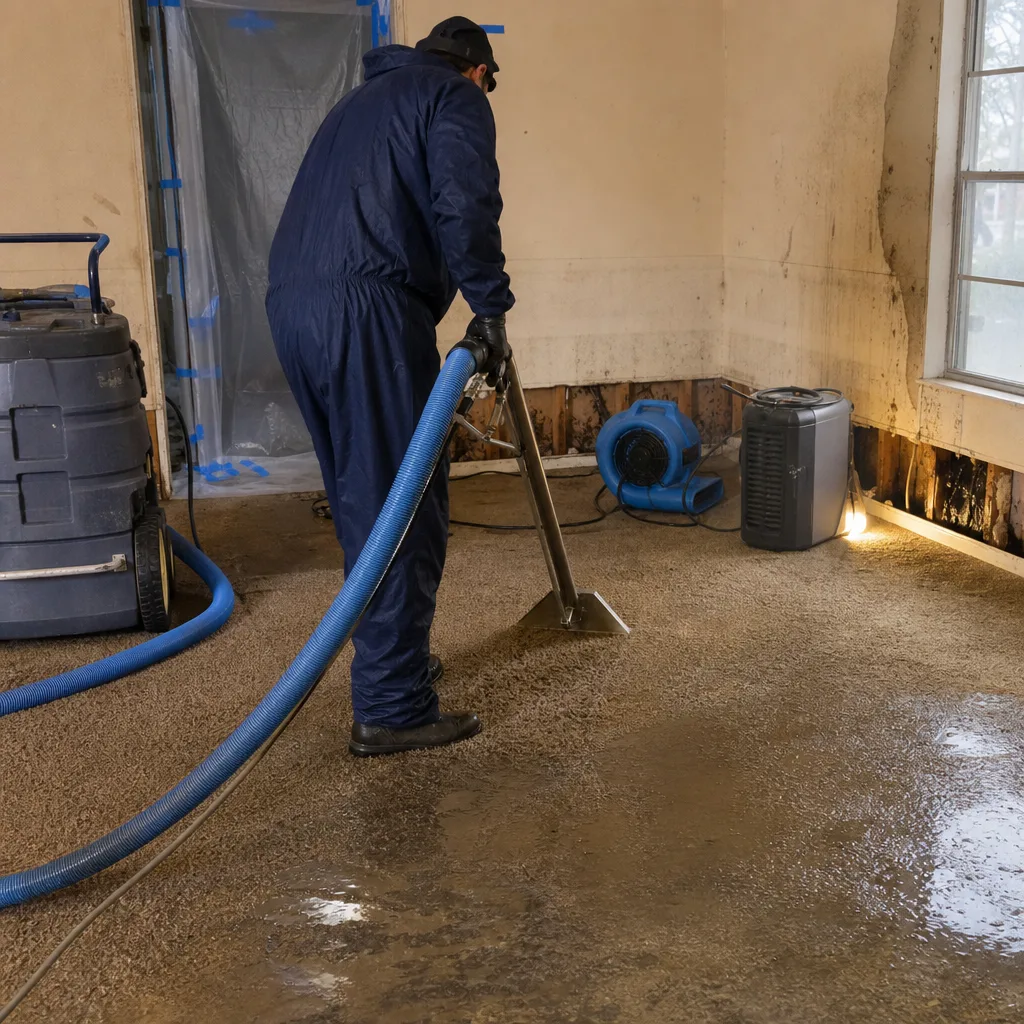
Drying equipment is positioned based on the moisture map and airflow calculations, not guesswork. We calculate required dehumidification capacity using the Class of loss and cubic footage, then deploy equipment from Dri-Eaz, Phoenix, and other manufacturers with documented capacity ratings.
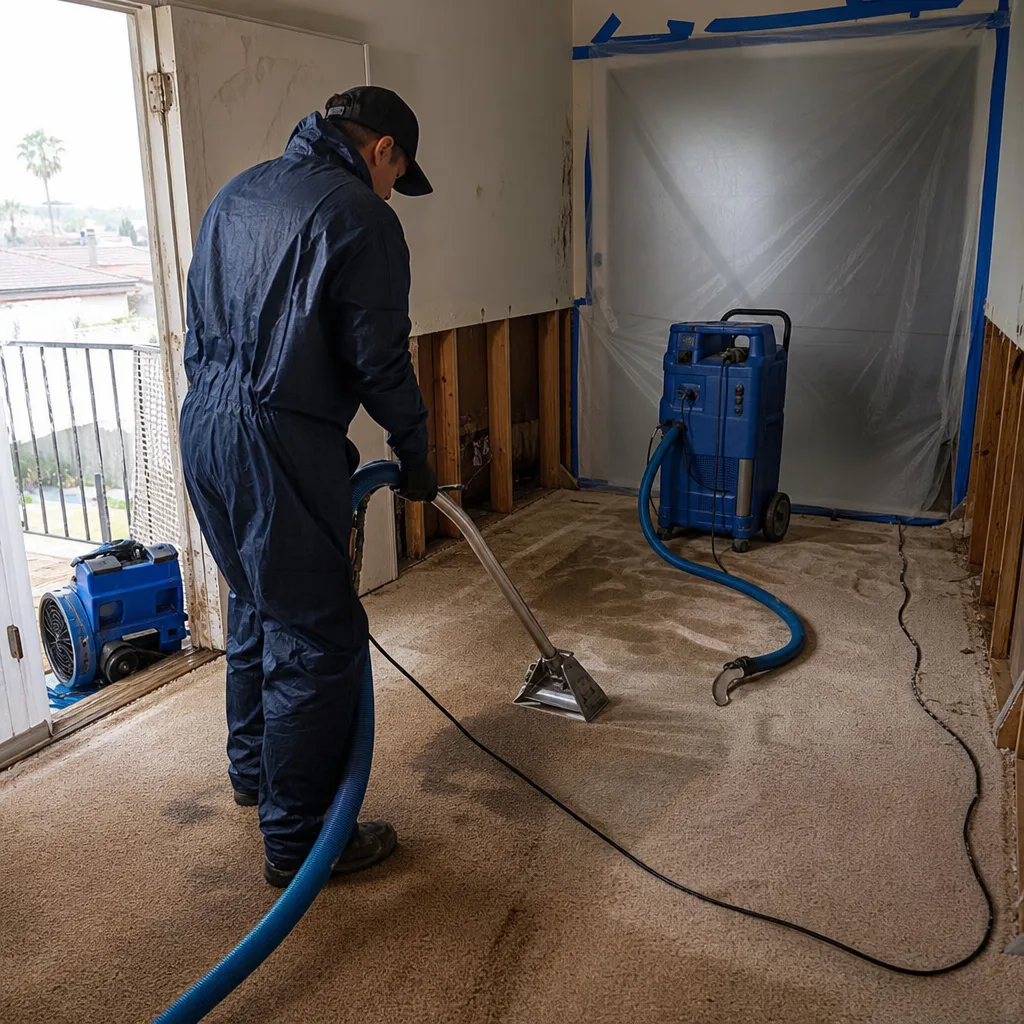
Daily monitoring includes: psychrometric readings at equipment intake and exhaust, at the center of affected areas, and at unaffected reference points; moisture meter readings at mapped locations; equipment performance verification; and photographic documentation of conditions and any changes. These logs are compiled into the drying record delivered with the final invoice.
In Long Beach’s humid coastal environment, we regularly extend drying to 4-5 days for Class 2 and 3 losses where standard inland timelines assume 3 days. We communicate this extension with documented justification, preventing surprise and protecting the claim.
Repair and Reconstruction
Once drying is verified, repair work begins. This phase requires permits where applicable, and scopes must specify materials, finishes, and quality standards. We provide written repair scopes with the same line-item detail as mitigation, including matching existing finishes where required by policy language.
Mold, Fire, and Specialty Restoration
Beyond water damage, Long Beach properties face distinct challenges in mold, fire, and specialty remediation where documentation standards are equally rigorous and insurer scrutiny is often higher.
Mold Remediation
Mold remediation in Long Beach is shaped by coastal humidity, older housing stock, and the prevalence of slab construction that limits drainage and ventilation. We regularly remediate mold in Naples Island crawl spaces, Belmont Heights basements, and Peninsula homes where salt air corrosion compromises window seals and introduces moisture.
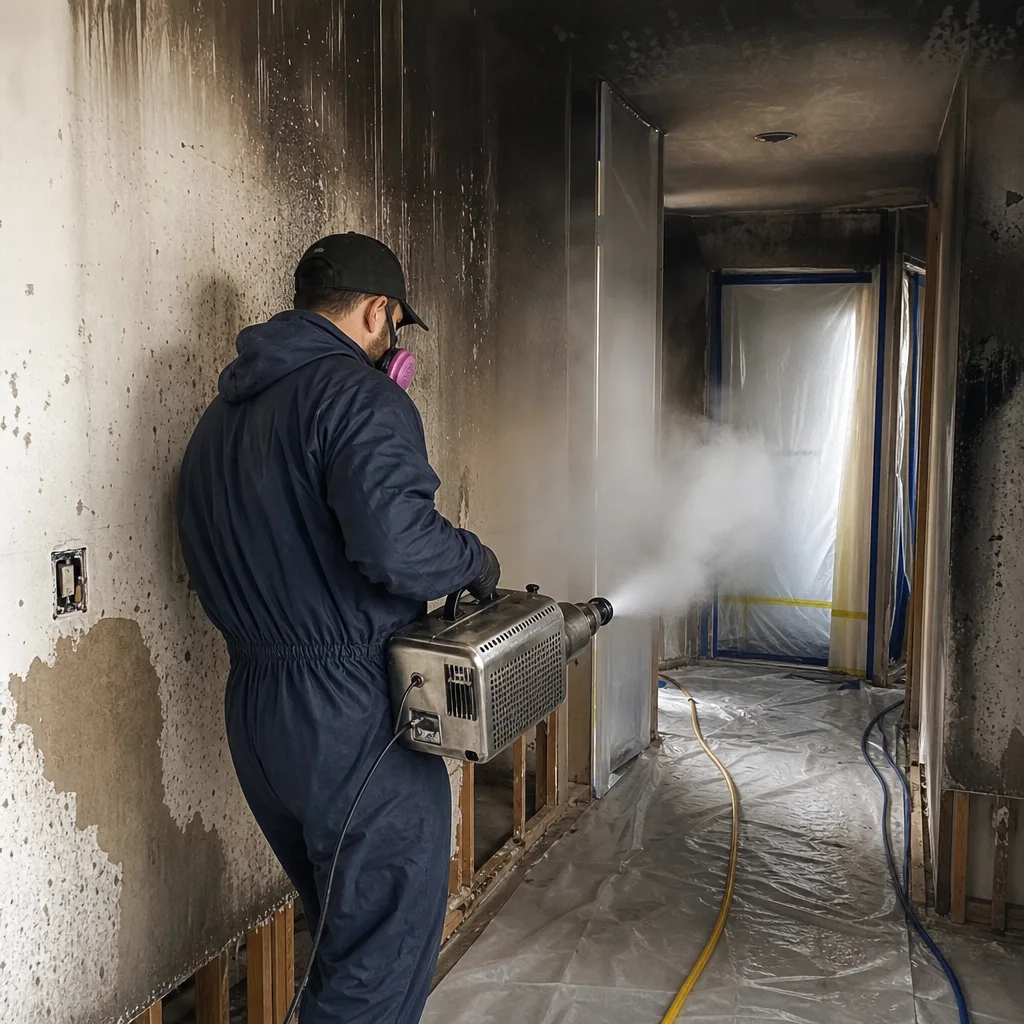
S520 requires containment, negative air pressure, and post-remediation verification. Our scopes specify containment barrier construction, air scrubber CFM ratings and placement, and the clearance sampling protocol. We do not consider a mold job complete until laboratory results confirm clearance criteria are met.
Fire and Smoke Damage Restoration
Fire and smoke damage restoration in Long Beach follows IICRC S700, which addresses structure cleaning, content restoration, and odor control. Fire losses generate complex documentation requirements because multiple coverage types may apply: structure, contents, additional living expenses, and sometimes landscaping or detached structures.
Our fire documentation includes pre-cleaning photo inventory, room-by-room condition assessment, content pack-out with individual item tracking, and cleaning process documentation with before/after photography. This level of documentation supports contents claims that might otherwise be settled at depreciated value or denied for lack of proof.
Storm, Sewage, and Biohazard
These categories involve Category 3 water or regulated materials requiring specialized handling, disposal documentation, and often health department notification. Sewage backups in Long Beach’s older sewer districts, particularly in Alamitos Beach and the Downtown area with combined sewer infrastructure, require immediate reporting to the Long Beach Water Department and documented disinfection per health codes.
Biohazard cleanup requires OSHA compliance, manifest documentation for regulated waste disposal, and chain-of-custody records. These are not standard restoration tasks. They are regulated activities where documentation failures create liability exposure.
Common Mistakes to Avoid
- Signing a scope without line-item detail. A lump-sum estimate prevents adjuster review and leaves you vulnerable to change orders. Insist on unit prices, quantities, and material specifications.
- Allowing work to start before moisture mapping. Without baseline readings, there is no proof of progress. Any contractor who begins extraction before mapping is skipping the documentation that gets claims paid.
- Accepting “dry to the touch” as completion. Dry to the touch is not dry standard. Materials must reach documented equilibrium moisture content, verified with calibrated meters, or mold risk persists.
- Ignoring permit requirements for repairs. Unpermitted electrical, plumbing, or structural work creates disclosure obligations on sale and claim complications if damage recurs. Verify permit status before work begins.
- Failing to document contents damage immediately. Contents claims require proof of pre-loss condition and post-loss damage. Photograph everything before disposal or cleaning, or risk depreciated settlement.
- Assuming standard drying timelines apply in coastal Long Beach. The marine layer, elevated humidity, and older construction extend drying curves. Scopes that assume 3-day drying without local adjustment are unrealistic.
- Not requesting the daily drying log. This is your proof that equipment ran, conditions were monitored, and progress occurred. Without it, the insurer can reasonably question whether drying services were actually performed.
When to Call a Professional
Call a certified restoration professional when water affects more than a small, contained area you can dry with household fans; when water originates from a potentially contaminated source (dishwasher, washing machine, toilet, or ground intrusion); when mold is visible or you detect musty odors after prior water damage; when fire or smoke has affected multiple rooms or HVAC systems; or when structural damage is suspected from storm, vehicle impact, or tree fall.
In these situations, DIY efforts typically miss hidden damage, lack documentation for insurance, and may worsen conditions. A professional assessment identifies the full scope, documents it for your claim, and establishes the controlled process that prevents secondary damage.
DryMark Restoration Long Beach offers free estimates in Long Beach. Our assessments include a documented moisture map or condition evaluation, a written scope with line-item pricing, and explanation of the documentation chain your claim will require. Call (424) 373-5092 to schedule.
Frequently Asked Questions
Water damage mitigation in Long Beach typically ranges from $1,200 for a small, contained Category 1 loss to $8,500-15,000 for a whole-house Category 3 flood with extensive structural drying. Mold remediation averages $2,500-7,500 depending on containment area and material removal requirements. Fire and smoke restoration varies widely based on structure and content scope, often $10,000-50,000+. Reconstruction is priced separately based on finish selections and permit requirements. Call (424) 373-5092 for a written estimate specific to your property - estimates are free.
Most homeowners policies cover sudden and accidental water damage, fire, and storm damage, subject to your deductible and policy limits. Coverage exclusions commonly apply to gradual leaks, maintenance neglect, and flood damage from outside rising water (which requires separate flood insurance). Documentation quality directly affects settlement: well-documented claims with moisture maps, drying logs, and photo records process at higher values with fewer disputes. We coordinate directly with adjusters and provide the documentation format carriers expect. Call (424) 373-5092 to discuss your specific policy situation.
Standard structural drying in Long Beach takes 3-5 days for Class 1-2 water losses, and 5-7 days for Class 3-4 losses or those in high-humidity conditions. The coastal marine layer frequently extends timelines by 24-48 hours compared to inland locations. We do not remove equipment until daily logs confirm materials have reached dry standard, documented with meter readings. Rushing this phase risks mold growth and claim disputes. Every day of drying is logged and justified.
Drywall replacement over 200 square feet, electrical work beyond fixture replacement, plumbing repairs behind walls, and HVAC ductwork modification all require permits from Long Beach Development Services. Properties in the Coastal Zone or Historic Districts face additional review. Work without required permits may be excluded from insurance coverage and must be disclosed on property sale. Our scopes identify all permit requirements and costs upfront.
Ask for specific documentation: the initial moisture map with dated readings, daily psychrometric logs with equipment serial numbers, and final clearance readings confirming dry standard. Ask which standard edition they follow (S500 2021 for water, S520 2015 with 2022 addendum for mold). A contractor following standards produces this documentation routinely. One who cannot, or who describes standards in vague terms, is not following them. We deliver this documentation on every job, compiled in the final job file.
The Haven Standard is the operating framework Alicia Brennan established when founding DryMark Restoration Long Beach in 2011, built from her experience as a claims adjuster who saw documentation gaps destroy legitimate claims. It includes: Clause 1, written price before any work starts; documented photo record on every visit; daily drying logs with psychrometric data; and the 365-Day Done Right Promise - if it’s not done right, we make it right. These are not marketing claims. They are signed guarantees with every contract.
The Bottom Line
Damage restoration in Long Beach is not an event to survive. It is a documented process to manage, and the quality of that documentation determines whether your claim closes at full value or gets disputed. Coastal humidity extends drying timelines. Older construction hides moisture. Permit requirements affect repair scope. Insurers pay for proof, not promises. The homeowners who fare best are those who treat documentation as a deliverable equal to the physical work, who read scopes with attention to line-item detail, and who choose contractors whose daily practices produce the records that claims require.
Since 2011, DryMark Restoration Long Beach has completed over 12,000 restorations, every one with a written price before work started, a photo record on every visit, and documentation to IICRC, RIA, and IFA standards. We offer free estimates and free second opinions on any competitor’s written quote. For damage restoration in Long Beach that closes claims cleanly, call (424) 373-5092.
Written by Alicia Brennan, Owner at DryMark Restoration Long Beach, serving Long Beach since 2011.